

Navigating menopause can feel like riding a rollercoaster you never bought a ticket for. Between hot flashes, mood swings, and that stubborn weight that seems to settle around your middle, you’re probably wondering what happened to your body. Here’s the good news: a well-planned menopausal diet meal plan can make a world of difference in how you feel and look during this transition.
Table of Contents
Why Your Diet Matters During Menopause
When estrogen levels drop during menopause, your body goes through some serious changes. Your metabolism slows down, you lose muscle mass faster, and fat tends to redistribute to your belly. It’s not your imagination—your body really does process food differently now.
A strategic menopausal diet meal plan addresses these changes head-on. You’ll focus on foods that stabilize blood sugar, support bone health, reduce inflammation, and keep your energy levels steady throughout the day. Think of it as giving your body exactly what it needs to thrive, not just survive.
Key Principles of a Menopausal Diet

Before we dive into the meal plan, let’s cover the basics. Your menopausal diet should include:
Lean proteins at every meal to preserve muscle mass and keep you satisfied. Calcium-rich foods to protect your bones as estrogen declines. Fiber-packed vegetables to support digestion and weight management. Healthy fats from sources like avocados, nuts, and olive oil help balance hormones. Phytoestrogens from foods like flax seeds and soy naturally support hormone balance.
You’ll also want to limit processed foods, excess sugar, alcohol, and caffeine—all of which can trigger hot flashes and worsen symptoms.
Your 7-Day Menopausal Diet Meal Plan

This meal plan for menopause is designed to keep your energy stable, support healthy weight management, and make you feel amazing. Each day provides around 1,500-1,800 calories with a balance of protein, healthy fats, and complex carbs.
Day 1: Fresh Start
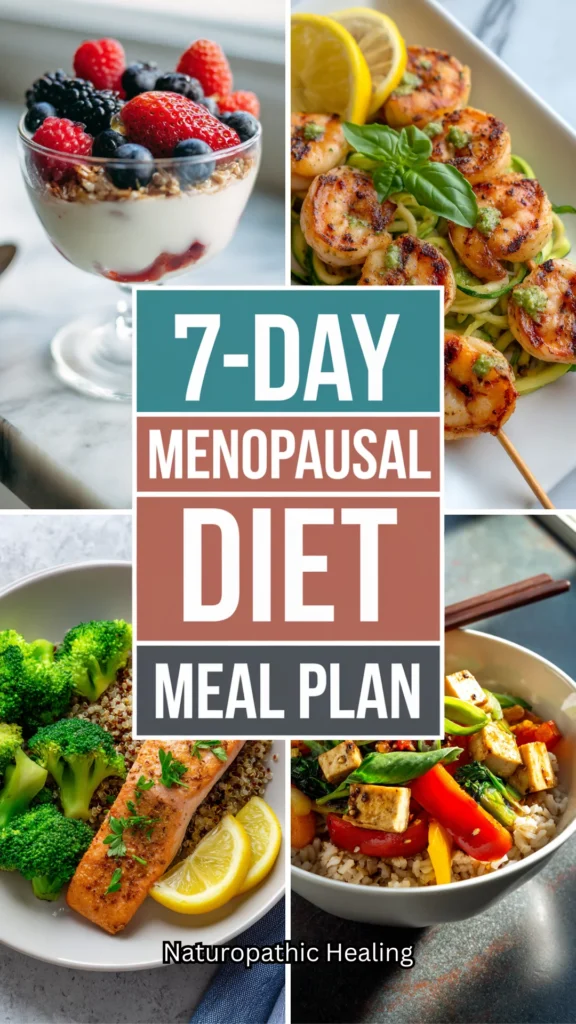
- Breakfast: Greek yogurt parfait with mixed berries, ground flax seeds, and a drizzle of honey. The probiotics support gut health while flax provides omega-3s and lignans.
- Lunch: Grilled chicken salad with spinach, cherry tomatoes, cucumber, avocado, and olive oil vinaigrette. This combination delivers protein, healthy fats, and loads of nutrients.
- Dinner: Baked salmon with roasted broccoli and quinoa. Salmon’s omega-3 fatty acids help reduce inflammation while quinoa provides complete protein.
- Snack: Apple slices with almond butter for sustained energy without blood sugar spikes.
Day 2: Plant Power
- Breakfast: Scrambled eggs with sautéed kale and mushrooms, served with whole-grain toast. Eggs provide vitamin D for bone health.
- Lunch: Lentil soup with carrots, celery, and turmeric. Lentils are packed with fiber and plant-based protein to keep you full.
- Dinner: Stir-fried tofu with mixed vegetables over brown rice. Tofu contains phytoestrogens that may help ease symptoms.
- Snack: Edamame sprinkled with sea salt—a perfect protein-rich snack.
Day 3: Mediterranean Vibes
- Breakfast: Overnight oats made with almond milk, chia seeds, walnuts, and blueberries. This menopause-friendly breakfast provides sustained energy.
- Lunch: Mediterranean chickpea salad with feta cheese, olives, tomatoes, and cucumber dressed in lemon-herb vinaigrette.
- Dinner: Grilled turkey breast with roasted Brussels sprouts and sweet potato. Turkey is a lean protein that won’t weigh you down.
- Snack: A small handful of mixed nuts for healthy fats and minerals.
Day 4: Comfort Food, Healthified
- Breakfast: Smoothie bowl with spinach, banana, protein powder, topped with sliced almonds and hemp seeds.
- Lunch: Turkey and avocado wrap in a whole wheat tortilla with lettuce, tomato, and hummus.
- Dinner: Lean beef (grass-fed if possible) with cauliflower mash and green beans. Beef provides iron, which many menopausal women need.
- Snack: Carrot sticks with hummus for a crunchy, satisfying treat.
Day 5: Seafood Special
- Breakfast: Cottage cheese with sliced peaches, pumpkin seeds, and a sprinkle of cinnamon. Cottage cheese is high in protein and calcium.
- Lunch: Tuna salad made with Greek yogurt instead of mayo, served over mixed greens with whole grain crackers.
- Dinner: Grilled shrimp skewers with zucchini noodles and pesto sauce. Light yet satisfying.
- Snack: A pear with a small piece of dark chocolate for antioxidants.
Day 6: Asian Inspired
- Breakfast: Veggie omelet with bell peppers, onions, and a side of fresh berries. This menopause diet breakfast balances protein with antioxidants.
- Lunch: Miso soup with tofu, seaweed, and a side of edamame. Miso contains beneficial probiotics.
- Dinner: Baked cod with sesame-ginger bok choy and wild rice. Cod is low in calories but high in protein.
- Snack: Sliced bell peppers with guacamole.
Day 7: Sunday Reset
- Breakfast: Whole grain pancakes made with almond flour, topped with Greek yogurt and fresh strawberries.
- Lunch: Grilled vegetable and chicken kebabs with a side of tabbouleh salad.
- Dinner: Slow-cooked chicken breast with root vegetables and herbs. Perfect for meal prep for the week ahead.
- Snack: A small bowl of mixed berries with a dollop of whipped coconut cream.
Hydration Is Your Best Friend
Water intake becomes even more critical during menopause. Aim for at least eight glasses daily to support metabolism, reduce bloating, and help with hot flashes. Herbal teas like chamomile or peppermint count too. Just watch the caffeine intake, as it can trigger symptoms for some women.
Smart Swaps for Success
Making your menopausal diet meal plan work long-term means finding swaps you can live with. Replace white bread with whole-grain options. Swap sugary drinks for infused water. Choose baked or grilled foods over fried. Use Greek yogurt instead of sour cream. These small changes add up to big results.
Timing Matters Too
When you eat can be just as important as what you eat. Try to have your largest meal at lunch when your metabolism is most active. Keep dinner lighter and finish eating at least three hours before bed. This supports better sleep—something many menopausal women struggle with.
Beyond the Meal Plan
While this 7-day menopausal diet meal plan provides a solid foundation, remember that nutrition is just one piece of the puzzle. Combine it with regular exercise, stress management, and adequate sleep for the best results. Strength training is particularly important for maintaining muscle mass and bone density.
Listen to Your Body
Every woman experiences menopause differently. What works perfectly for your friend might not be ideal for you. Pay attention to how different foods make you feel. Keep a journal tracking your meals and symptoms if that helps. You might discover that certain foods trigger hot flashes or that eating more frequently keeps your energy steady.
Making It Sustainable
The key to any successful menopause meal plan is sustainability. You don’t need to be perfect—you just need to be consistent. Prep ingredients on Sunday to make weeknight cooking easier. Keep healthy snacks visible and accessible. Allow yourself occasional treats without guilt. This is about nourishing your body, not punishing it.
Your Next Steps
Starting a new menopausal diet meal plan might feel overwhelming, but you don’t have to change everything overnight. Pick a few meals from this plan that appeal to you and start there. Gradually incorporate more as you get comfortable. The goal is progress, not perfection.
Remember, this phase of life doesn’t have to be something you just endure. With the right nutrition strategy, you can feel energized, maintain a healthy weight, and even thrive during menopause. Your body is still capable of amazing things—it just needs the right fuel.
If you found this menopausal diet meal plan helpful, save this pin to your Pinterest board for easy reference! Share it with friends who might be navigating menopause too—we’re all in this together, and the right information can make all the difference.

