

Have you ever wondered how to make homemade sauerkraut right in your own kitchen? Trust me, it’s easier than you think! This tangy, probiotic-rich fermented food has been around for centuries, and once you try making it yourself, you’ll never want to go back to store-bought versions.
Table of Contents
Why Make Your Own Sauerkraut?
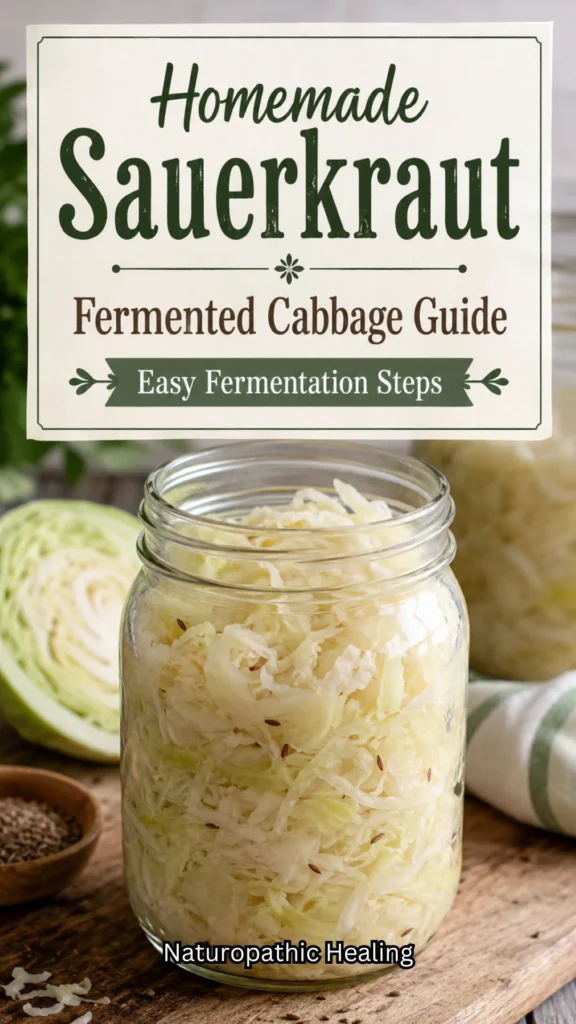
Making homemade sauerkraut isn’t just about saving money—though that’s definitely a perk. When you ferment cabbage at home, you’re creating a living food packed with beneficial bacteria that support your gut health. Plus, you control exactly what goes into it. No preservatives, no weird additives, just pure, crunchy goodness.
The process is surprisingly simple and requires just two basic ingredients: cabbage and salt. That’s it! You don’t need fancy equipment or a degree in food science. If you can massage cabbage and wait patiently, you can make sauerkraut at home.
What You’ll Need
Before we dive into the sauerkraut recipe, let’s gather your supplies. The beauty of this fermented cabbage project is that you probably already have everything you need.
Ingredients
- 1 medium head of green cabbage (about 2-3 pounds)
- 1-2 tablespoons of sea salt or kosher salt (non-iodized)
- Optional: caraway seeds, juniper berries, or other spices for flavor
Pro Tip on Salt Ratios: For consistent results, precision helps! A general rule of thumb is to use 2% salt by weight. Roughly, this translates to about 1 scant tablespoon of salt for every 1.5 to 2 pounds of cabbage.
Equipment
- Large mixing bowl: Use glass, ceramic, or stainless steel. Avoid aluminum or copper bowls, as the acid can react with these metals.
- Clean glass jar: Quart-sized or larger mason jars work perfectly.
- A Weight: Something to weigh down the cabbage (a smaller jar filled with water fits well inside a wide-mouth mason jar).
- Cheesecloth or coffee filter
- Rubber band
Step-by-Step Instructions for Making Homemade Sauerkraut

Step 1: Prep Your Cabbage
Remove the outer leaves of your cabbage and set one clean leaf aside—you’ll need it later. Cut the cabbage into quarters and remove the core. Now slice it into thin ribbons, about 1/8 inch thick. The thinner you slice, the better it ferments, but don’t stress about perfection.
Step 2: Salt and Massage
Place your shredded cabbage in your large bowl and sprinkle the salt over it. Start with 1 tablespoon for a medium cabbage (or use the weight calculation above).
Now comes the fun part—massage that cabbage! Use clean hands to squeeze and knead the cabbage for about 5-10 minutes. You’ll notice it starts to soften and release liquid. This is exactly what you want. The salt draws out the water from the cabbage, creating the natural brine that will preserve your sauerkraut.
Step 3: Pack It Tight
Transfer the cabbage and all that beautiful brine into your clean glass jar. Pack it down firmly with your fist or a wooden spoon, making sure the liquid covers the cabbage completely. Leave about 2 inches of space at the top of the jar for expansion.
Step 4: Weight It Down
This is crucial for successful fermentation. Your cabbage needs to stay completely submerged under the brine to prevent mold. Take that reserved outer cabbage leaf and place it over the shredded cabbage, then add your weight on top. The liquid should rise above the cabbage.
Step 5: Cover and Wait
Cover your jar with cheesecloth or a coffee filter secured with a rubber band. This allows gases to escape while keeping out dust and insects. Place your jar on a plate (it may bubble over!) in a cool, dark spot away from direct sunlight.
Step 6: Monitor and Taste
Now for the hardest part—waiting! Check your sauerkraut daily, pressing down on the weight to keep everything submerged. You’ll see bubbles forming—that’s good!
Start tasting after 3-5 days. The longer it ferments, the tangier it gets. Most people find their sweet spot between 1 and 4 weeks.
Step 7: Store and Enjoy
Once your homemade sauerkraut tastes just right to you, remove the weight and outer leaf. Seal the jar with a tight lid and store it in the refrigerator. The cold temperature slows fermentation dramatically, and your sauerkraut will keep for months.
Troubleshooting Tips

- Don’t see much liquid after massaging? If your cabbage is dry, add a bit of filtered water mixed with salt (1 teaspoon of salt per cup of water) until the cabbage is fully covered.
- White film vs. Mold:
- White film: If you see a flat, white, powdery film on top, that is likely Kahm yeast. It is harmless but can taste bad. Just scrape it off carefully.
- Mold: If you see fuzzy, raised spots that are blue, green, black, or pink, this is mold. Unfortunately, if this happens, discard the batch to be safe and start fresh.
Ways to Use Your Fermented Sauerkraut
Your homemade fermented sauerkraut is incredibly versatile. Pile it on hot dogs and sandwiches (like a classic Reuben), mix it into fresh salads, serve it alongside sausages and pork, or simply eat it straight from the jar. Each forkful delivers that satisfying crunch and tang along with billions of beneficial probiotics.
The active cultures in fermented foods like sauerkraut support digestive health, boost immunity, and may even improve your mood. Plus, it’s low in calories and high in fiber and vitamins C and K.
Final Thoughts
Learning how to make homemade sauerkraut is like unlocking a superpower in your kitchen. It’s affordable, nutritious, and ridiculously satisfying. Once you master this basic fermentation technique, you’ll want to experiment with adding different vegetables, spices, and flavors.
The transformation from simple cabbage to complex, tangy sauerkraut feels like kitchen magic, but it’s really just science—and delicious science at that. Your first batch might not be perfect, and that’s okay. Each batch teaches you something new about the process.
So grab a head of cabbage and give it a try. Your gut will thank you, your taste buds will celebrate, and you’ll have bragging rights for making your own probiotic-rich sauerkraut from scratch.
If you found this guide helpful, please save this pin to your fermented foods or healthy recipes Pinterest board so you can find it again! Share it with friends who want to learn how to make homemade sauerkraut too—everyone deserves to experience the joy of homemade fermented foods.

