

If you’ve been curious about plant medicine but aren’t sure where to begin, this guide to herbal tinctures for beginners covers everything you need — from how tinctures work and which herbs are safest to start with, to dosage guidance, safety considerations, and a simple step-by-step method for making your own at home.
Table of Contents
What Is an Herbal Tincture?

A tincture is a concentrated liquid extract of a plant. You soak herbs in a solvent — most commonly alcohol or vegetable glycerin — and that liquid draws out the plant’s active compounds: alkaloids, flavonoids, glycosides, essential oils, and more.
The result is a potent, shelf-stable extract you can take in small doses, usually measured in drops or milliliters.
Why tinctures instead of teas or capsules?
- Faster absorption — liquids enter the bloodstream more quickly than capsules
- Higher potency — the extraction process concentrates the plant’s active constituents
- Longer shelf life — alcohol-based tinctures can last 5–10 years
- Easy dosing — a dropper lets you adjust the amount precisely
- Convenient — a small bottle travels easily and doesn’t require brewing
Tinctures have been used in herbal medicine traditions for centuries, and today they’re one of the most popular forms of DIY herbal medicine.
Alcohol vs. Glycerin Tinctures: Which Should You Make?
This is one of the first decisions you’ll face as a beginner, and it matters. The solvent you choose affects extraction efficiency, shelf life, taste, and who can use the final product.
Alcohol Tinctures
Alcohol — typically food-grade ethanol like vodka or grain alcohol — is the traditional and most effective solvent for most herbs.
Pros:
- Extracts the widest range of plant compounds (both water-soluble and alcohol-soluble)
- Long shelf life: 5–10 years when stored properly
- Acts as a natural preservative
- Generally more potent than glycerin extracts
Cons:
- Contains alcohol — not suitable for children, pregnant women, recovering alcoholics, or those with certain health conditions
- Can taste harsh or bitter without dilution
Best for: Most adult applications. Ideal for roots, barks, and resins that need a strong solvent to release their compounds.
What alcohol to use: A 80-proof (40%) vodka works well for most herbs. For denser plant material like roots and barks, higher-proof alcohol (60–70%) improves extraction.
Glycerin Tinctures (Glycerites)
Vegetable glycerin is a sweet, viscous liquid derived from plant oils. It’s the go-to solvent for alcohol-free tinctures.
Pros:
- Alcohol-free — safe for children, pregnant women, and those avoiding alcohol
- Naturally sweet taste — much more palatable, especially for kids
- Still extracts many water-soluble plant compounds effectively
Cons:
- Less effective at extracting certain compounds (especially resins and alkaloids)
- Shorter shelf life: 1–3 years
- Less potent than equivalent alcohol tinctures
Best for: Gentle, water-soluble herbs like chamomile, lemon balm, elderberry, and licorice root. Also excellent for children’s formulas.
Glycerin tincture recipe (basic ratio): Use a 60% vegetable glycerin / 40% distilled water mixture as your menstruum (solvent). This ratio mimics the water content of a standard alcohol tincture and improves extraction.
Quick rule of thumb: If you’re making tinctures for yourself as a healthy adult, alcohol will give you the most potent result. If you’re making them for children or those avoiding alcohol, glycerin is the right choice.
Safety, Dosage & Who Should Be Cautious
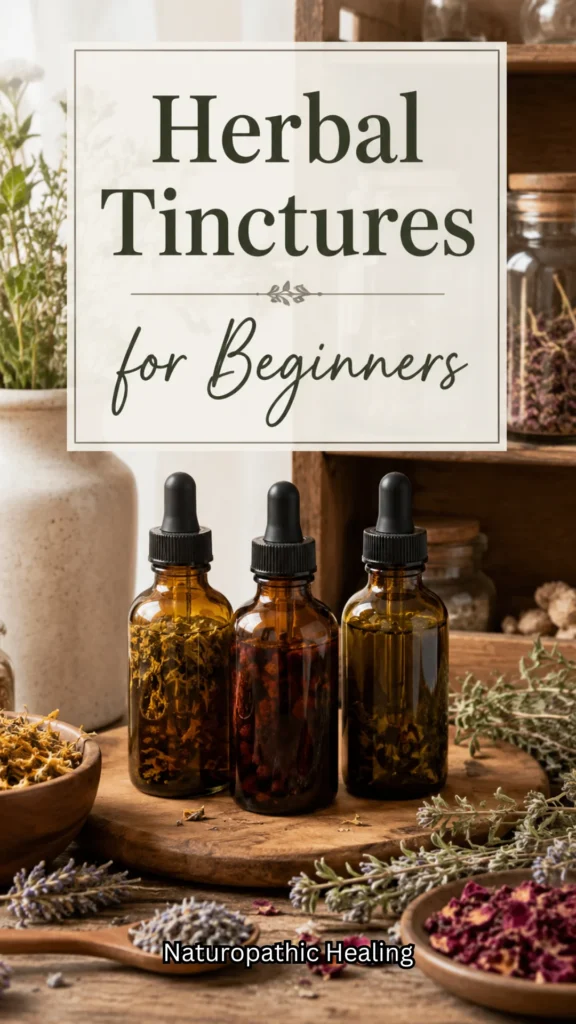
Herbs are powerful — that’s why they work. And like any powerful substance, they deserve respect.
General Dosage Guidelines
Tincture dosing varies by herb, concentration, and the person taking it. These are general starting points for standard 1:5 tinctures (1 part herb to 5 parts solvent):
| Herb | Typical Adult Dose | Frequency |
|---|---|---|
| Echinacea | 2–4 ml (40–80 drops) | 3x daily at first sign of illness |
| Ashwagandha | 2–4 ml | 1–2x daily |
| Chamomile | 2–4 ml | 2–3x daily |
| Valerian | 2–5 ml | 30 min before bed |
Always start at the lower end of a dose range and observe how your body responds before increasing.
Important Safety Considerations
Herb-drug interactions are real. Some herbs interact with prescription medications. For example:
- Valerian may intensify the effects of sedative medications
- Echinacea may affect immunosuppressants
- Ashwagandha may interact with thyroid medications
Always check with a healthcare provider if you take prescription drugs.
Pregnancy and breastfeeding: Many herbs are not studied for safety during pregnancy. When in doubt, avoid or consult a qualified herbalist or midwife.
Children: Always use glycerin tinctures for children, and use significantly lower doses (typically ¼ to ½ of the adult dose, adjusted for body weight).
Who should be especially cautious:
- People with autoimmune conditions (echinacea, in particular, may not be appropriate)
- Anyone with liver conditions (alcohol tinctures increase the liver’s workload)
- People with plant allergies (especially to the Asteraceae/daisy family)
- Those scheduled for surgery (some herbs affect bleeding and anesthesia)
This guide is educational, not medical advice. For serious health concerns, work with a qualified herbalist, naturopath, or integrative physician.
Best Herbs for Beginners
These four herbs are widely available, well-researched, gentle enough for most healthy adults, and straightforward to tincture at home. They’re a perfect starting point for anyone exploring natural remedy tinctures.
1. Echinacea (Echinacea purpurea or angustifolia)
What it’s used for: Immune support, shortening the duration of colds and upper respiratory infections.
Echinacea is probably the most studied herb in Western herbalism. It works best taken at the very first sign of a cold or illness, rather than as a daily preventative. The root and aerial parts (flowers, leaves, stems) all have medicinal value, though root tinctures tend to be more potent.
Best tincture base: Alcohol (60–70% proof works best for the root)
Tip: Echinacea is best used short-term during illness — typically 7–10 days — rather than taken continuously for months.
2. Ashwagandha (Withania somnifera)
What it’s used for: Stress adaptation, energy, mental clarity, and sleep quality.
Ashwagandha is an adaptogen — a class of herbs that help the body respond to physical and emotional stress more effectively. It’s deeply rooted in Ayurvedic medicine and has become one of the most popular herbal supplements in the West. Regular use over 4–8 weeks is typically when people begin to notice its calming, stabilizing effects.
Best tincture base: Alcohol (the root’s active compounds — withanolides — extract well in both alcohol and water)
Tip: Ashwagandha has a distinctive earthy smell and bitter taste. Mixing it with honey or a warm drink makes it more pleasant.
3. Chamomile (Matricaria chamomilla)
What it’s used for: Relaxation, anxiety, digestive discomfort, and sleep.
Chamomile is one of the gentlest and most versatile herbs for beginners. It soothes nervous tension and digestive upset, and is safe for children when used as a glycerite. The flowers are used medicinally, and their apigenin content is responsible for much of the calming effect.
Best tincture base: Glycerin or low-proof alcohol (the delicate flower constituents extract well in both)
Tip: Chamomile is in the daisy (Asteraceae) family. Anyone with allergies to ragweed, chrysanthemums, or related plants should approach it with caution.
4. Valerian (Valeriana officinalis)
What it’s used for: Sleep support, anxiety, and nervous tension.
Valerian root is a well-known sleep herb that works best taken 30–60 minutes before bed. It doesn’t cause drowsiness the way pharmaceutical sleep aids do; instead, it promotes the kind of relaxed readiness for sleep that feels natural. The smell is notoriously pungent (think: old gym socks), but the effects are worth it for many users.
Best tincture base: Alcohol — the valerenic acids responsible for valerian’s effects are not well-extracted in glycerin alone.
Tip: Valerian may cause vivid dreams in some people. If this is bothersome, reduce the dose.
How to Make Herbal Tinctures: Step-by-Step
This is the folk method — simple, reliable, and used by home herbalists for generations. It doesn’t require precise lab measurements, just good materials and patience.
What You’ll Need
- Dried or fresh herb of your choice
- Alcohol (80-proof vodka or vegetable glycerin for a glycerite)
- Clean glass mason jar with tight-fitting lid (8 oz or 16 oz)
- Kitchen scale or measuring cups
- Fine mesh strainer or cheesecloth
- Dark glass dropper bottles for storage
- Labels and a marker

Step 1: Prepare Your Herb
Use dried herbs if you’re new to tincturing — they’re easier to work with and reduce the risk of mold.
- If using roots or bark: chop or grind them coarsely to increase surface area
- If using leaves or flowers: crumble them gently
- Standard folk method ratio: Fill your jar loosely with dried herb (about halfway to ⅔ full), or use a weight ratio of 1 part herb to 5 parts liquid (1:5)
Step 2: Add Your Solvent
Pour your alcohol or glycerin mixture over the herb until the jar is full and the herb is completely submerged — the liquid should cover the plant material by at least an inch.
If using glycerin: mix 60% food-grade vegetable glycerin with 40% distilled water before adding to the jar.
Stir gently to release any air bubbles.
Step 3: Seal and Label
Cap the jar tightly. Label it with:
- Herb name (and part used: root, leaf, flower, etc.)
- Solvent used
- Date started
Store the jar in a cool, dark location — a cupboard or pantry works well.
Step 4: Macerate for 4–6 Weeks
This is the waiting phase. The solvent is slowly pulling the plant’s active constituents out of the cellular structure.
- Shake or stir your jar daily — this improves extraction by keeping the herb moving in the liquid
- Check periodically to make sure the herb stays submerged; add more liquid if needed
- The liquid will gradually deepen in color and take on the herb’s scent — this is a good sign
Minimum maceration time: 4 weeks. Six weeks is better for roots and dense plant material.
Step 5: Strain Your Tincture
After maceration:
- Line a strainer with cheesecloth and set it over a bowl or large measuring cup
- Pour the jar contents through the cheesecloth
- Gather the cheesecloth around the spent herb (called the “marc”) and squeeze firmly — don’t waste the liquid
- Compost the spent herb material
Step 6: Bottle and Label
Pour your finished tincture into dark glass dropper bottles using a small funnel. Dark glass (amber or cobalt blue) protects the tincture from light degradation.
Label each bottle with:
- Herb name
- Solvent and ratio
- Date finished
- Dosage notes
Storage, Shelf Life & Potency Tips
Getting the most out of your tinctures comes down to three things: darkness, temperature stability, and proper containers.
Storage essentials:
- Store in dark glass bottles away from direct light
- Keep in a cool, stable environment — avoid areas near the stove, dishwasher, or windows where temperature fluctuates
- Do not refrigerate alcohol tinctures — cool room temperature is ideal
Shelf life:
- Alcohol tinctures: 5–10 years when stored properly
- Glycerin tinctures: 1–3 years
- Water-only extracts (not tinctures): 24–48 hours only
Signs your tincture has turned:
- Unusual or off odor (not just the strong herbal smell)
- Cloudiness in an alcohol tincture (some sediment is normal, but sudden cloudiness is not)
- Visible mold — discard immediately
Potency tips:
- Use quality, well-sourced dried herbs — the tincture is only as good as what goes into it. Look for herbs from reputable suppliers that test for heavy metals and pesticides.
- Make sure herb is fully submerged throughout maceration — exposed plant material can mold
- Shake daily during maceration to maximize extraction
- Squeeze every drop out of the marc at straining — the most potent liquid is often the last to come out
Ready to Start?
Making your own herbal tinctures is one of the most satisfying steps you can take toward a more hands-on relationship with your health. It takes patience — that 4–6 week wait can feel long — but the moment you strain your first batch and hold a bottle of something you made yourself, it’s worth every day.
Start simple. Pick one herb that speaks to a real need in your life right now — maybe chamomile for stress, echinacea to keep in the cabinet for cold season, or valerian if sleep is a struggle. Make a small batch. Learn how your body responds. And go from there.
The world of DIY herbal medicine is wide, and tinctures are one of its best doorways.
Always consult a healthcare professional before beginning any new herbal supplement, especially if you are pregnant, nursing, taking prescription medications, or managing a chronic health condition.

