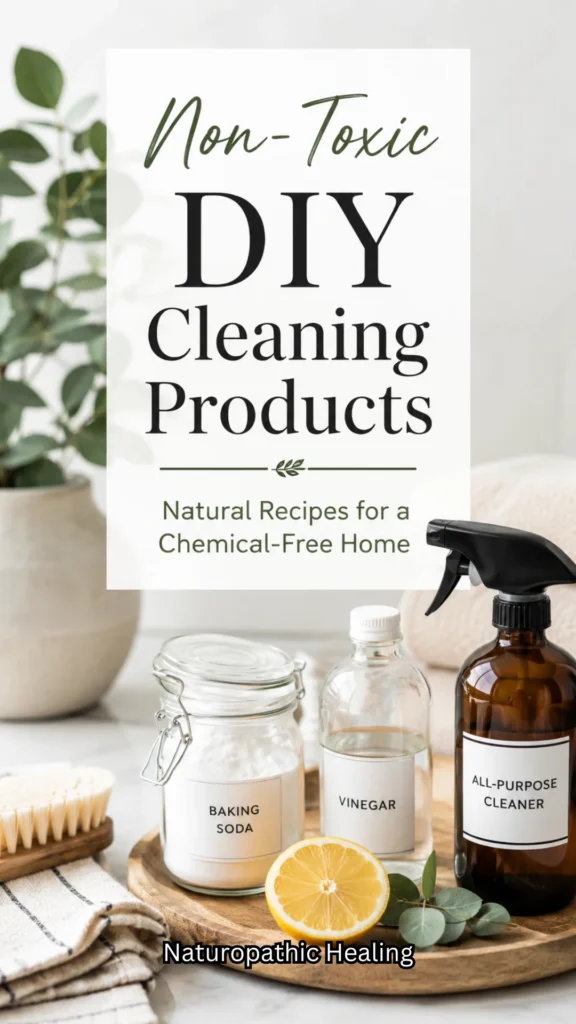

Non-toxic DIY cleaning products are the simplest way to detox your home without sacrificing cleaning power. With just a few pantry staples, you can create fresh‑smelling, effective cleaners that protect your family from harsh chemicals — and save money while you’re at it. If you’re ready to swap the chemical cloud for a cleaner, greener routine, keep reading… the recipes below will completely change the way you clean your home.
Table of Contents
Why Switch to Non-Toxic Cleaning Products?
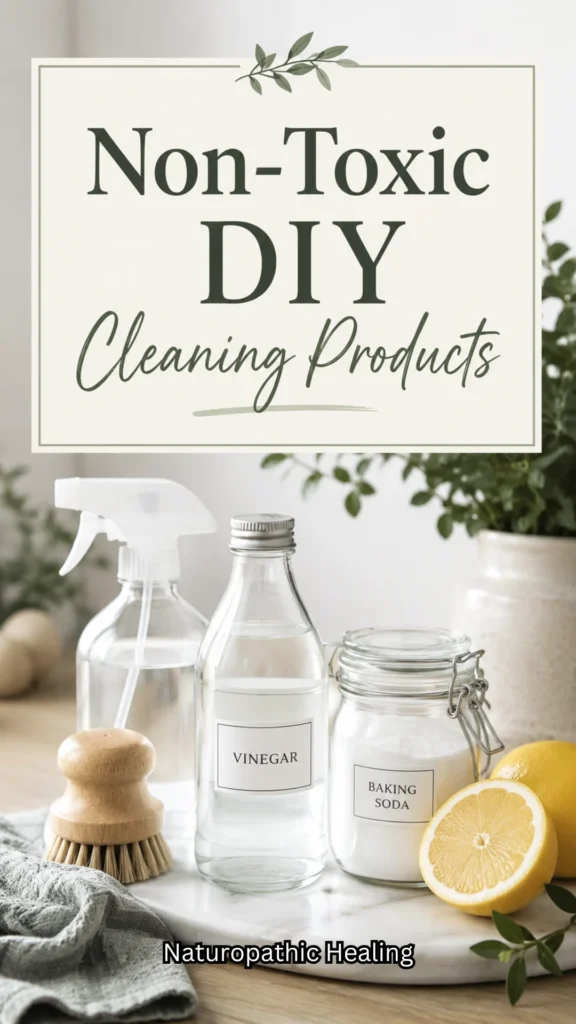
Conventional cleaners work — but at a cost. Many contain synthetic fragrances, harsh solvents, and irritants that linger on surfaces and in the air long after you’ve finished scrubbing. For families with kids, pets, or anyone with asthma or sensitive skin, that’s worth thinking about.
The good news? Non-toxic DIY cleaning products are just as effective for everyday messes, cost a fraction of the price, and leave your home smelling fresh without the chemical cloud. Switching is one of the simplest, most satisfying chemical-free home tips you can adopt this year.
Must-Have Natural Cleaning Ingredients
Stock your cleaning cabinet with these five powerhouses, and you’ll be ready to make almost any recipe:
- White distilled vinegar — A natural disinfectant and degreaser that cuts through grime and neutralizes odors. Use the plain 5% acidity variety.
- Baking soda — A mild abrasive and odor absorber that’s gentle enough for most surfaces, from tubs to refrigerators.
- Castile soap — A plant-based liquid soap (Dr. Bronner’s is the classic) that lifts dirt and grease without petroleum-based surfactants.
- Hydrogen peroxide (3%) — A powerful yet biodegradable disinfectant that kills bacteria and mold. The standard drugstore bottle is perfect.
- Water — Filtered or distilled water gives your recipes a longer, cleaner shelf life.
That’s it. With these five ingredients plus a handful of essential oils, you can clean your entire home.

Essential Oils for Disinfecting
Essential oils do more than make your cleaners smell good — many have genuine antimicrobial properties. The best essential oil cleaning recipes lean on these top performers:
- Tea tree oil — Broad-spectrum antimicrobial, excellent for bathrooms and mold-prone areas.
- Lavender — Antibacterial with a calming scent; great for bedrooms and fabric sprays.
- Lemon or wild orange — Natural degreasers with a bright, clean aroma. Perfect for kitchens.
- Eucalyptus — Antiviral and refreshing; wonderful in bathroom and floor cleaners.
- Peppermint — Antibacterial and a natural pest deterrent. Use sparingly — it’s potent.
A general rule of thumb: 15–30 drops per cup of liquid is the sweet spot for cleaning power without wasting product.
7 Core Non-Toxic DIY Cleaning Recipes
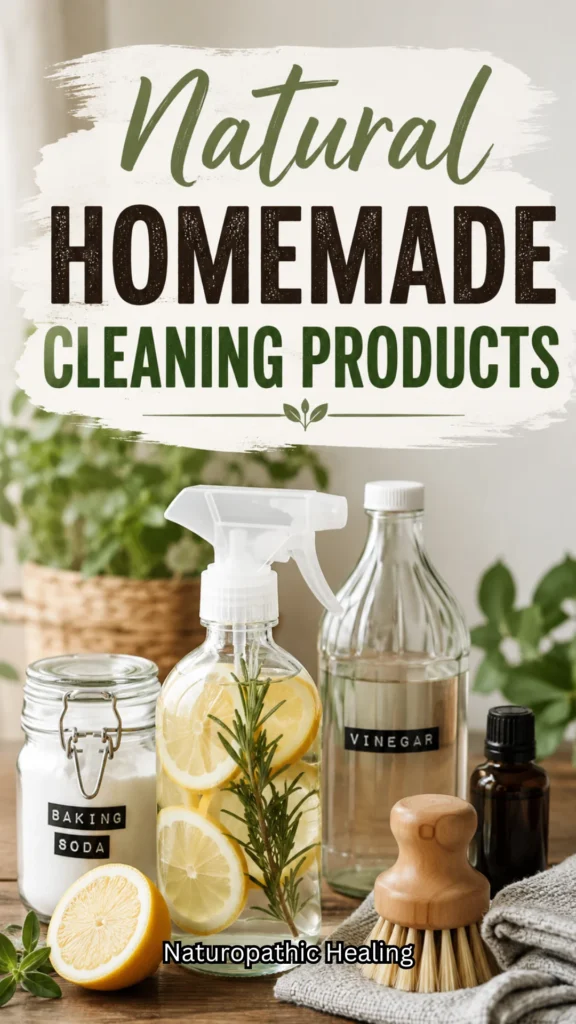
1. DIY All-Purpose Cleaner
Use on countertops, appliances, sinks, and sealed tile.
- 1 cup water
- 1 cup white vinegar
- 15 drops lemon essential oil
- 10 drops tea tree essential oil
Combine in a 16 oz spray bottle, shake gently, and spray away. Wipe with a damp cloth.
⚠️ Do not use on natural stone (marble, granite) — vinegar etches the surface.
2. Baking Soda Scrub
Ideal for tubs, sinks, stovetops, and grout.
- ½ cup baking soda
- Enough castile soap to make a paste (about 2–3 tbsp)
- 10 drops eucalyptus essential oil
Mix into a thick paste, apply with a damp sponge, scrub, and rinse well.
3. Glass & Mirror Cleaner
Streak-free shine without the blue chemicals.
- 2 cups water
- ½ cup white vinegar
- ¼ cup rubbing alcohol (70%)
Pour into a spray bottle. Spray on glass and wipe immediately with a lint-free cloth or newspaper.
4. Disinfecting Bathroom Spray
Tackles germs on toilets, faucets, and tile.
- 1 cup water
- 1 cup hydrogen peroxide (3%)
- 20 drops tea tree essential oil
- 10 drops lavender essential oil
Mix in a dark spray bottle (hydrogen peroxide degrades in light). Spray, let sit for 5 minutes, then wipe.
5. Fresh Fabric & Air Spray
Freshen upholstery, curtains, and rooms naturally.
- 1 cup distilled water
- 2 tbsp witch hazel or vodka
- 20 drops lavender essential oil
- 10 drops peppermint essential oil
Combine in a small spray bottle. Shake before each use and mist lightly over fabrics or into the air.
6. Natural Floor Cleaner
Safe for sealed hardwood, laminate, and tile.
- 1 gallon warm water
- ½ cup white vinegar
- 10 drops lemon essential oil
- 5 drops peppermint essential oil
Mix in a bucket and mop as usual. No rinsing needed — it air-dries clean.
⚠️ Do not use on unsealed hardwood or waxed floors — vinegar can damage the finish.
7. Toilet Bowl Cleaner
Fizzing action tackles stains and odors.
- ½ cup baking soda
- ¼ cup castile soap
- 20 drops tea tree essential oil
- 10 drops eucalyptus essential oil
Mix into a paste and pour into the bowl. Let fizz for 10 minutes, scrub, and flush.
Safety Notes — Important!
Natural doesn’t always mean mix-and-match. A few combinations to avoid:
- Never mix vinegar and castile soap. This is the most common DIY cleaning mistake. The acid in vinegar causes the soap to curdle into a greasy, ineffective mess. Use them separately — vinegar-based recipes in one bottle, soap-based recipes in another.
- Never mix vinegar and hydrogen peroxide in the same bottle. Applied separately to a surface (spray one, then the other) they’re a great disinfecting combo. Mixed together they form peracetic acid, which can irritate skin, eyes, and lungs.
- Never mix bleach with anything — not vinegar, not castile soap, not ammonia. If you’re transitioning away from bleach, finish those products before introducing DIY alternatives.
- Keep essential oils away from pets, especially cats, who metabolize certain oils differently. Lavender and tea tree in particular should be used in well-ventilated areas if you have feline housemates.
Storage & Shelf Life
Your eco-friendly cleaning products won’t last forever — here’s how to store them right:
| Recipe | Container | Shelf Life |
|---|---|---|
| All-purpose cleaner | Glass or HDPE plastic spray bottle | 2–3 months |
| Baking soda scrub | Small glass jar with lid | 1–2 months |
| Glass cleaner | Glass or plastic spray bottle | 3–6 months |
| Disinfecting bathroom spray | Dark glass bottle (essential) | 1–2 months |
| Fabric & air spray | Glass spray bottle | 2–3 months |
| Floor cleaner | Mixed fresh per use | Same day |
| Toilet cleaner | Glass jar | 1 month |
General tips:
- Label every bottle with the name and date made.
- Store out of direct sunlight and away from heat.
- Distilled water extends shelf life compared to tap water.
- When in doubt, make smaller batches more frequently — these recipes take under five minutes.
Ready to Get Started?
Making the switch to non-toxic DIY cleaning products doesn’t require a total pantry overhaul overnight. Start with the DIY all-purpose cleaner this weekend — it handles 80% of your everyday cleaning needs. Once you notice how well it works (and how good your home smells), the rest of the recipes will follow naturally.
Your home, your air, and your family will thank you.