

Have you ever wondered what goes into making those expensive designer fragrances? Or perhaps you’re tired of commercial perfumes that don’t quite capture the essence of what you’re looking for? Creating your own perfume recipes with essential oils might be the perfect solution. Not only is it surprisingly simple, but it also allows you to craft a signature scent that’s uniquely yours.
In this guide, I’ll walk you through everything you need to know about making homemade perfumes using pure essential oils. From understanding fragrance notes to mastering the art of blending, you’ll discover how rewarding it can be to create personalized scents that reflect your personality and preferences.
Table of Contents
Why Make Your Own Perfumes with Essential Oils?
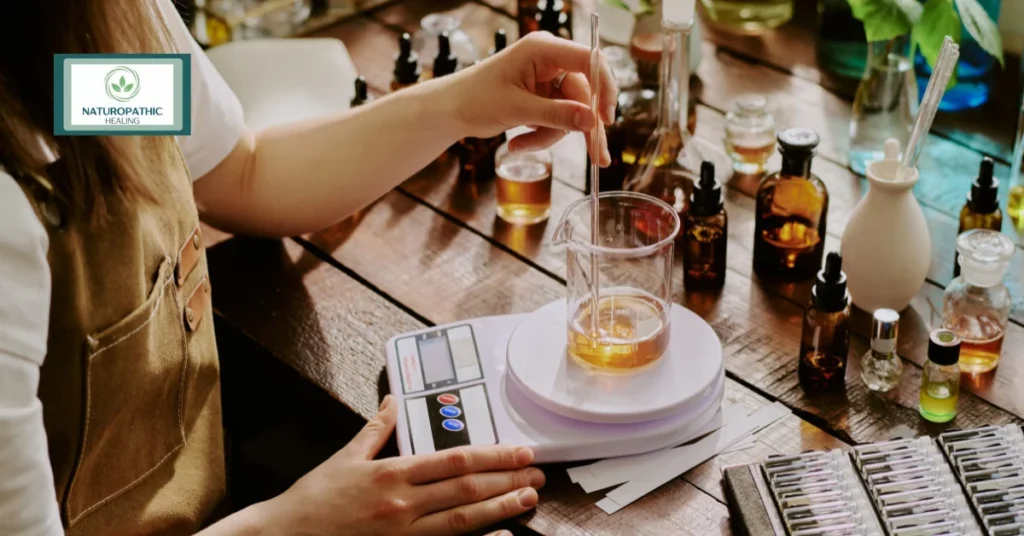
There are countless reasons to dive into the world of DIY perfume making. Commercial fragrances often contain synthetic chemicals that can trigger allergies or headaches in sensitive individuals. By creating your own perfume, you control exactly what goes onto your skin.
Beyond the health benefits, making your own fragrances is also:
- Cost-effective compared to designer brands
- A creative outlet for self-expression
- A way to create truly unique scents not found in stores
- Free from potentially harmful synthetic chemicals
- Customizable to your specific preferences
Plus, there’s something incredibly satisfying about receiving compliments on a fragrance you’ve crafted yourself!
Understanding Fragrance Notes in Essential Oil Perfumes
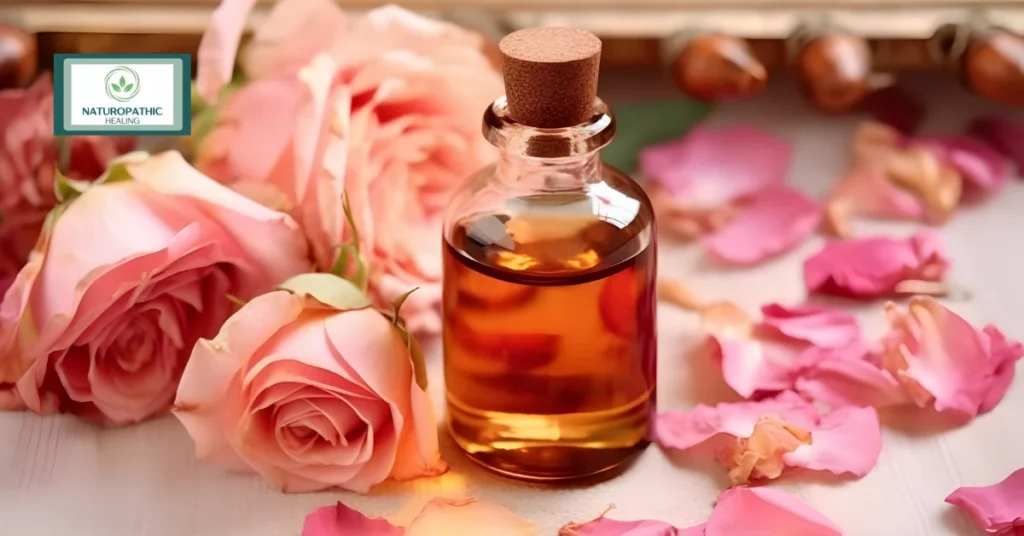
Before diving into specific perfume recipes with essential oils, it’s important to understand how fragrances are structured. Professional perfumers think in terms of “notes” that emerge at different times after application:
Top Notes
These are the first scents you detect when applying a perfume. They’re typically light and fresh but evaporate quickly, usually within 15-30 minutes. Common top notes include:
- Citrus oils (bergamot, lemon, grapefruit)
- Herbaceous oils (basil, eucalyptus, peppermint)
- Light floral oils (lavender)
Middle Notes
Also called “heart notes,” these emerge as the top notes dissipate and form the core of your perfume. They typically last 2-4 hours and provide the main character of your fragrance. Popular middle notes include:
- Floral oils (rose, jasmine, ylang-ylang)
- Spice oils (cinnamon, cardamom, nutmeg)
- Fruity oils (black pepper, juniper berry)
Base Notes
These create the foundation of your perfume and are the last to develop on your skin. They’re rich, deep, and can last for days on fabric. Common base notes include:
- Woody oils (cedarwood, sandalwood)
- Resinous oils (frankincense, myrrh, benzoin)
- Earthy oils (vetiver, patchouli)
- Vanilla and other warm, rich scents
Creating a balanced perfume means including oils from each category to create a complex, evolving scent experience.
Essential Supplies for Making Your Own Perfumes
Before starting your perfume-making journey, gather these basic supplies:
- Essential oils (a selection of top, middle, and base notes)
- A carrier oil like jojoba or fractionated coconut oil
- High-proof alcohol (optional, for spray perfumes)
- Small glass bottles with tight-fitting lids
- Droppers or pipettes for precise measuring
- Small funnels
- Labels for your creations
- Notebook to record your perfume recipes
Quality matters when it comes to essential oils. Look for pure, therapeutic-grade oils from reputable companies. Lower-quality oils may contain additives that can cause skin reactions or simply won’t smell as good.
5 Beginner-Friendly Perfume Recipes with Essential Oils
Now let’s dive into some specific recipes! These blends are designed to be simple yet sophisticated, perfect for those just starting their perfume-making adventure.
1. Citrus Sunshine Perfume Oil
This bright, uplifting blend is perfect for daytime wear.
Ingredients:
- 10 drops sweet orange essential oil
- 6 drops bergamot essential oil
- 4 drops lemon essential oil
- 3 drops ylang-ylang essential oil
- 2 drops vanilla absolute
- 1 tablespoon jojoba oil
Instructions:
- Add all essential oils to your glass bottle.
- Fill the remainder with jojoba oil.
- Close tightly and roll between your palms to blend.
- Label your creation and date it.
- Let it mature for at least 48 hours before using.
2. Floral Romance Perfume Spray
This delicate floral blend evokes a spring garden in bloom.
Ingredients:
- 8 drops lavender essential oil
- 6 drops rose essential oil (or rose geranium for a more affordable option)
- 4 drops jasmine essential oil
- 2 drops vanilla absolute
- 1 drop patchouli essential oil
- 1 oz high-proof alcohol
- 1 oz distilled water
Instructions:
- Add all essential oils to a glass spray bottle.
- Add the alcohol and shake well.
- Add the distilled water and shake again.
- Let the mixture sit for 2-4 weeks, shaking occasionally.
- The longer it matures, the more the scent profile will develop.
3. Woodland Whisper Solid Perfume
This grounding, earthy scent is perfect for those who prefer a subtle fragrance.
Ingredients:
- 8 drops cedarwood essential oil
- 5 drops cypress essential oil
- 3 drops frankincense essential oil
- 2 drops vetiver essential oil
- 1 tablespoon beeswax pellets
- 1 tablespoon coconut oil
- 1 teaspoon jojoba oil
Instructions:
- Create a double boiler by placing a heat-safe glass bowl over a pot of simmering water.
- Melt the beeswax and coconut oil together.
- Remove from heat and add jojoba oil.
- Let cool slightly but not solidify, then add essential oils.
- Pour into a small tin or container and allow to set completely.
- Apply to pulse points with your fingertip.
4. Exotic Spice Roll-On Perfume
This warm, spicy blend is perfect for evening wear or cooler months.
Ingredients:
- 5 drops cardamom essential oil
- 4 drops cinnamon bark essential oil
- 4 drops ginger essential oil
- 3 drops vanilla absolute
- 2 drops sandalwood essential oil
- 10 ml jojoba oil
- Roll-on glass bottle
Instructions:
- Add essential oils directly to your roll-on bottle.
- Fill the remainder with jojoba oil.
- Secure the roller ball and cap, then shake gently.
- Allow to mature for at least one week before use.
- Apply to pulse points as desired.
5. Ocean Breeze Light Cologne
This fresh, clean scent is perfect for hot summer days.
Ingredients:
- 10 drops bergamot essential oil
- 8 drops spearmint essential oil
- 6 drops eucalyptus essential oil
- 4 drops cypress essential oil
- 2 drops vetiver essential oil
- 2 oz high-proof alcohol
- 1 oz distilled water
Instructions:
- Combine all essential oils in a glass bottle.
- Add alcohol and shake thoroughly.
- Add water and shake again.
- Store in a cool, dark place for 2-4 weeks, shaking daily.
- Strain through a coffee filter if necessary.
- Transfer to a spray bottle for use.
Discover More Essential Oils
- Natural Relief: The Complete Guide to Essential Oils for Fever
- Essential Oils for Face: A Comprehensive Guide
- Essential Oils for Gut Health: A Comprehensive Guide
- Essential Oils for Vertigo: A Natural Approach to Relief
- Essential Oils for Inflammation: Nature’s Healing Power
Tips for Creating Your Own Unique Perfume Recipes
Ready to venture beyond these starter recipes? Here are some tips for creating your own signature scent blends:
Start with the Rule of 30
A good starting point for perfume creation is the 30-50-20 rule:
- 30% top notes
- 50% middle notes
- 20% base notes
This helps ensure a balanced fragrance that evolves beautifully on your skin.
Keep a Perfumer’s Journal
Record all your essential oil combinations and your impressions of each blend. Note which ones you love and what you might change. This becomes an invaluable resource as you develop your perfuming skills.
Use Perfume Blotter Strips
Professional perfumers use paper strips to test fragrances without applying them to skin. This allows you to quickly assess how oils blend together before committing to a full recipe.
Consider Fragrance Families
Different essential oils fall into fragrance families like floral, woody, oriental, and fresh. Oils within the same family often blend well together, making this a good starting point for beginners.
Create Accords First
An accord is a blend of 2-3 oils that creates a specific effect. By creating several complementary accords and then combining them, you can create more complex and sophisticated perfumes.
How to Make Your Perfumes Last Longer
One challenge with natural perfumes is that they typically don’t last as long as commercial fragrances. Here are some tricks to improve longevity:
- Add fixative ingredients like benzoin, vanilla, or sandalwood to your blends
- Apply to clothes as well as skin (test for staining first)
- Apply unscented lotion to pulse points before your perfume
- Store perfumes properly in dark glass bottles away from heat and light
- Allow your perfumes to “mature” for several weeks before regular use
Common Mistakes to Avoid When Making Perfumes
Even experienced perfumers sometimes make these errors:
- Using too many oils in one blend (stick to 3-5 for beginners)
- Adding too much of a powerful oil like patchouli or ylang-ylang
- Not allowing enough maturation time
- Storing perfumes in plastic containers or clear glass
- Expecting immediate perfection (perfume making is an art that takes practice!)
Safety Considerations for DIY Perfumers
While essential oils are natural, they’re also highly concentrated plant compounds that deserve respect:
- Always perform a patch test before applying a new blend extensively
- Research each oil for potential sensitivities or contraindications
- Use proper dilution rates (typically 1-3% essential oil in a carrier base)
- Avoid photosensitizing oils like bergamot if you’ll be in the sun
- Keep your creations away from children and pets
- If pregnant or nursing, consult with a healthcare provider before using essential oils
FAQs About Perfume Recipes with Essential Oils
Natural perfumes typically last 2-6 hours on the skin, though base notes may linger longer. The perfume itself, when properly stored, should remain good for 6-12 months.
While fragrance oils can be used, they’re synthetic and don’t offer the therapeutic benefits of essential oils. They do, however, often last longer and can be less expensive.
Jojoba oil is often considered ideal because it’s lightweight, non-greasy, and has virtually no scent of its own. Fractionated coconut oil is another good option.
Increase the ratio of essential oils to carrier oil, but never exceed a 5% dilution for safety. Also, adding fixative base notes like benzoin or sandalwood can help.
Body chemistry interacts with perfume ingredients, creating a unique scent on each person. Temperature, hormones, and even diet can influence how a perfume develops on your skin.
No, you can create oil-based perfumes without alcohol. Alcohol helps disperse the scent and creates a spray format, but oil-based perfumes often stay closer to the skin and can be more moisturizing.
Share Your Perfume Creations!
If you’ve enjoyed creating your own perfume recipes with essential oils, why not share your passion with others? Save your favorite recipes to your Pinterest board dedicated to DIY beauty or natural living. Your friends might be inspired to create their own signature scents too! Tag us in your creations or leave a comment with your favorite combinations—we’d love to hear how your perfume-making journey is going.
Remember, perfume creation is both an art and a science—the more you practice, the better you’ll become at crafting truly exceptional fragrances that perfectly express your unique personality.

What is vanilla absolute? When I type it in to search on Amazon it just shows Vanilla essential oil.
Vanilla absolute is a highly concentrated, aromatic extract made from vanilla beans (Vanilla planifolia), commonly used in perfumery and high-end natural products. Unlike most essential oils, vanilla cannot be steam distilled. Instead, vanilla absolute is obtained through solvent extraction, resulting in a rich, deep brown substance with an intense, true vanilla scent.
Many products labeled as “vanilla essential oil” are actually synthetic fragrance oils or vanilla extracts blended with a carrier oil. True vanilla essential oil is extremely rare and not commonly found.
When searching online, especially on sites like Amazon, you’ll often see mislabeled products. Look for “vanilla absolute” or “vanilla CO2 extract” from reputable suppliers for the most authentic vanilla aroma.
I’ve added a trusted link to vanilla absolute in this post to help you find the real thing.
I need recipes for larger 1 or 2 gallon containers can you furnish me with the formulas please?
Thanks for your interest! We’ll be publishing more recipes and formulas for larger quantities soon, so stay tuned.
ok thanks I’ll be waiting and expectant
Love 💖 your formulas can you post more perfume spray recipes like ( floral Romance) in large drops . I make that perfume and it smells Beautiful
Thank you so much! I’m so happy you loved Floral Romance and that it smells beautiful!
I’ll be sharing more perfume spray recipes in larger drop versions very soon — stay tuned!