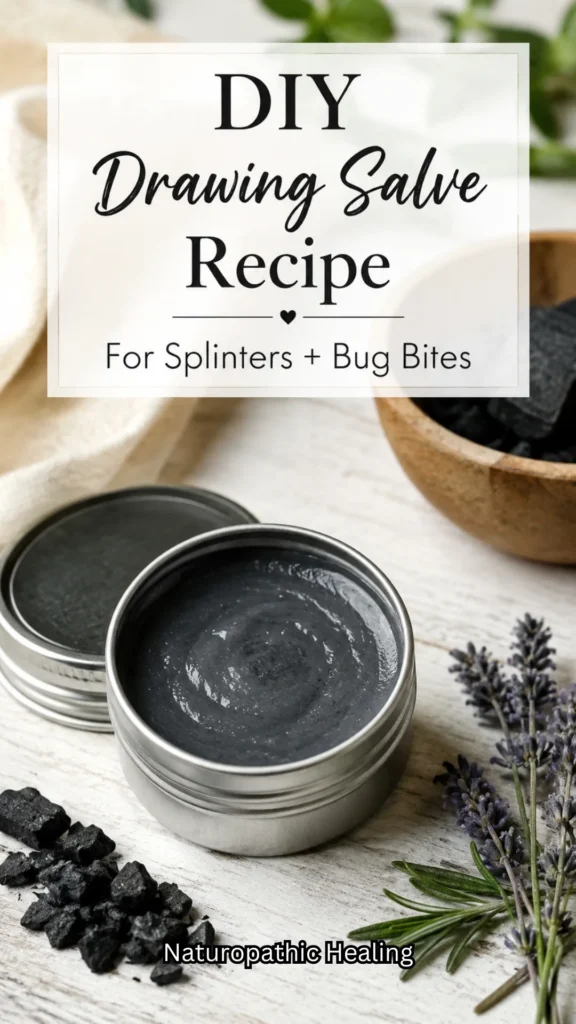

If you’ve ever dealt with a stubborn splinter buried deep under the skin, an angry insect bite that just won’t quit, or a patch of irritated skin that nothing seems to soothe — you need a drawing salve in your life. This old-fashioned remedy has been used for generations, and honestly? It still holds up. Let’s walk through a simple, effective drawing salve recipe you can make right at home with natural ingredients.
Table of Contents
What Is Drawing Salve and How Does It Work?
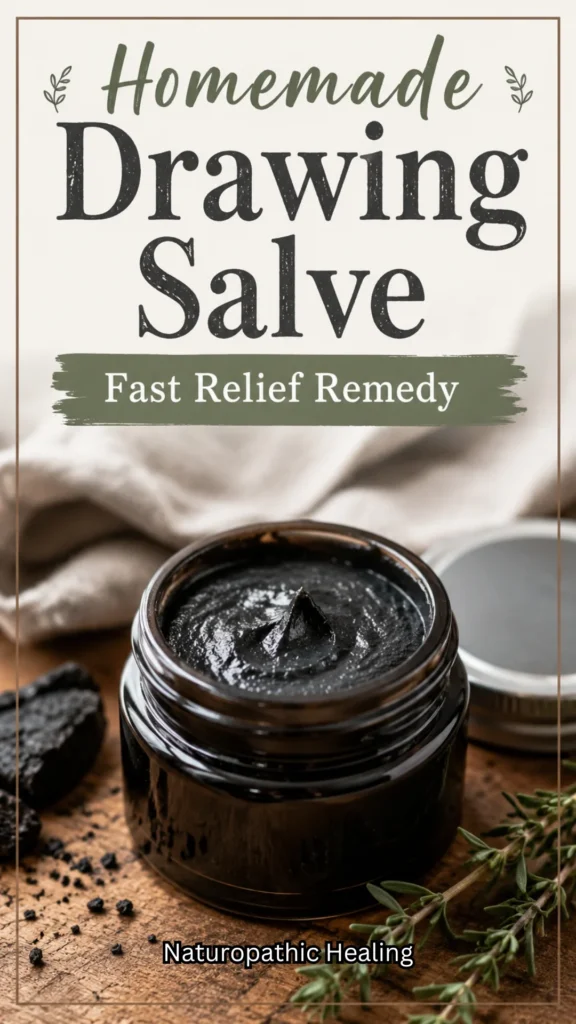
A drawing salve (sometimes called a black salve or ichthammol salve) is a thick herbal ointment designed to draw out impurities from beneath the skin. Think of it like a magnet for:
- Splinters
- Thorns
- Insect stingers
- Boils
- Ingrown hairs
- Minor infections
The magic comes from ingredients like activated charcoal, bentonite clay, and castor oil, which work together to pull debris toward the surface while soothing inflammation.
If you enjoy natural skincare remedies, you’ll also love my DIY calendula salve recipe — another gentle, healing balm for irritated skin.
Benefits of a Homemade Drawing Salve
A well-made natural drawing salve can help with:
- Drawing out splinters and thorns
- Soothing bug bites and stings
- Reducing inflammation and redness
- Softening skin to release trapped debris
- Supporting minor wound healing
- Calming irritated or congested skin
For more herbal DIYs, check out my guide on how to make salves and balms — perfect for beginners.
Drawing Salve Recipe: Ingredients
Here’s what you’ll need to make your own natural drawing salve:
- 2 tbsp beeswax pellets — creates the solid, balm-like base
- 3 tbsp coconut oil — deeply moisturizing with natural antimicrobial properties
- 2 tbsp olive oil — nourishing and skin-softening
- 1 tbsp castor oil — a classic drawing salve ingredient known for pulling out foreign objects
- 1 tsp activated charcoal powder — the key drawing agent that pulls out toxins and debris
- 1 tsp bentonite clay — enhances the drawing effect and soothes irritation
- 10 drops of tea tree essential oil — powerful antibacterial and antifungal properties
- 10 drops lavender essential oil — calming, anti-inflammatory, and skin-healing
- Optional: 5 drops frankincense essential oil — for extra anti-inflammatory support

How to Make Drawing Salve: Step-by-Step Instructions

- Set up a double boiler — place a heat-safe glass bowl over a pot of simmering water. Never melt your oils directly on the stove.
- Add the beeswax, coconut oil, olive oil, and castor oil to the bowl. Stir gently as everything melts together — this takes about 5–7 minutes.
- Remove from heat and let the mixture cool slightly for 2–3 minutes. You want it warm but not scorching hot.
- Stir in the activated charcoal and bentonite clay thoroughly. This is where your salve gets its signature dark color — don’t panic, it’s totally normal!
- Add the essential oils (tea tree, lavender, and frankincense if using). Stir well to combine.
- Pour into small tins or glass jars while the mixture is still liquid. Work quickly — it sets fast!
- Let it cool completely at room temperature (about 30–60 minutes) before putting the lid on.
- Label and store in a cool, dry place. Your homemade drawing salve will keep for up to 12 months.
If you enjoy herbal skincare, you’ll also love my easy comfrey salve recipe — another powerful healing balm.
How to Use Drawing Salve
Using your DIY drawing salve is simple. Just apply a generous layer directly over the affected area — whether it’s a splinter, bee sting, infected pore, boil, or insect bite. Cover it with a bandage or piece of gauze and leave it on for several hours or overnight. The longer it sits, the better it works. When you remove the bandage, you should see the impurity has moved much closer to the surface (or completely out).
For splinter removal, the salve softens the skin around the splinter while drawing it upward, making it much easier to grab with tweezers — or it may come out on its own!
Tips for Best Results
- Always do a patch test first if you have sensitive skin.
- Don’t use on open wounds or deep punctures without consulting a doctor.
- Activated charcoal will stain fabric, so use old bandages or gauze you don’t mind tossing.
- Store your natural drawing salve away from heat and direct sunlight to preserve potency.
- For stubborn cases, reapply fresh salve every 8–12 hours.
If you love wild-foraged remedies, try my dandelion salve recipe — perfect for dry, cracked skin.
Frequently Asked Questions (FAQ)
Most people see results within 4–12 hours, depending on the severity of the issue.
Yes, but avoid use on open wounds and always do a patch test first.
It may help draw out surface-level impurities, but deeper issues should be evaluated by a doctor.
Generally yes, but charcoal and essential oils can be strong. Start with a small test area.
Final Thoughts
This drawing salve recipe is one of those timeless, practical remedies every home should have. It’s simple to make, uses natural ingredients, and works beautifully for splinters, bites, and irritated skin.
If you found this helpful, save this to your Natural Remedies or Herbal DIY Pinterest board so you can find it later — and share it with someone who could use a little herbal magic in their life.