

If you’ve been looking for a simple, all-natural remedy to soothe sore muscles, dry skin, or aching joints, then this comfrey salve recipe is exactly what you need. Made from just a handful of plant-based ingredients, this herbal salve has been used for centuries — and for good reason. Let’s dive in!
Table of Contents
What Is Comfrey and Why Does It Work?
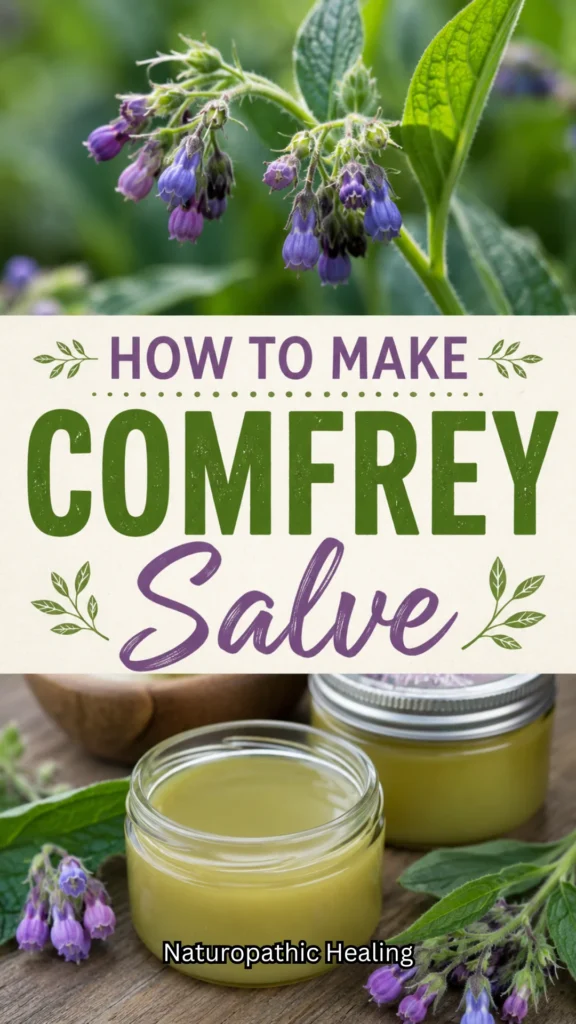
Comfrey (Symphytum officinale) is a powerful medicinal herb packed with a compound called allantoin, which promotes cell regeneration and speeds up tissue repair. It also contains rosmarinic acid, a natural anti-inflammatory that helps calm irritated skin. Whether you’re dealing with bruises, eczema, dry cracked heels, or stiff joints, a homemade comfrey salve can work wonders.
Benefits of Using a Comfrey Salve
Before we get to the recipe, here’s a quick look at why this natural healing salve is worth making:
- Promotes faster skin healing — thanks to allantoin’s cell-regenerating properties
- Reduces inflammation — great for sore muscles and joint pain
- Deeply moisturizes — leaves skin soft and nourished
- Soothes severely dry, chapped, and calloused skin — gentle enough for sensitive skin
- 100% natural ingredients — no harsh chemicals or preservatives
What You’ll Need: Comfrey Salve Ingredients
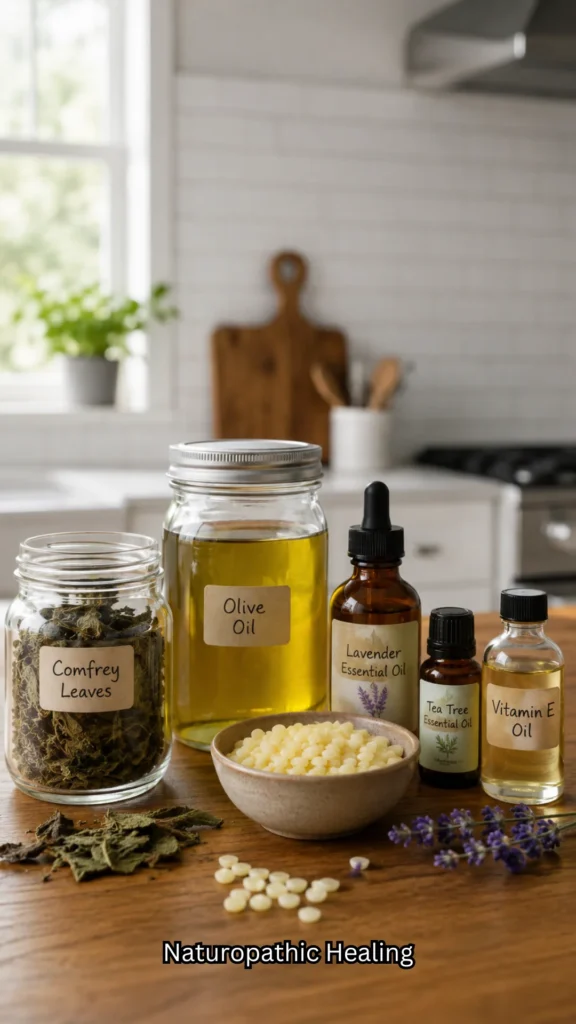
This DIY comfrey salve uses simple ingredients you can find at most health food stores or online.
- Prep time: 10 minutes
- Infusion time: 2–6 hours
- Yields: About 1 cup (8 oz) of salve
Ingredients:
- 1 cup dried comfrey leaves or root (or ½ cup of each)
- 1 cup carrier oil (olive oil, coconut oil, or sweet almond oil works great)
- ¼ cup beeswax pellets (use candelilla wax for a vegan version)
- 10–15 drops lavender essential oil (optional, for extra soothing)
- 5 drops tea tree essential oil (optional, for antimicrobial benefits)
- 1 teaspoon vitamin E oil (optional, acts as a natural preservative)
If you are completely new to herbalism, you might want to check out my comprehensive guide on How to Make Salves and Balms for Natural Healing before getting started!

How to Make Comfrey Salve: Step-by-Step Instructions
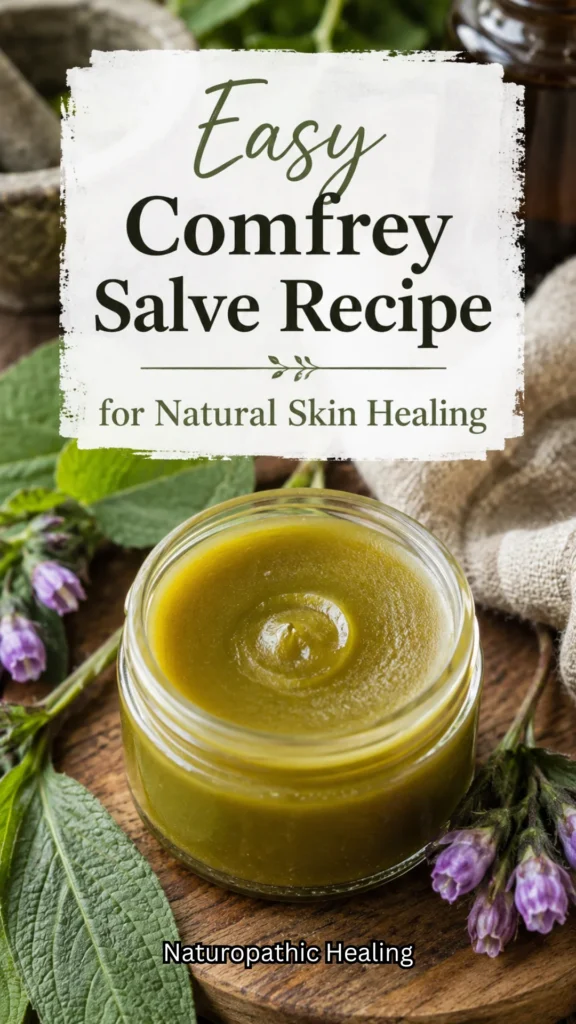
Step 1 — Infuse the Oil
- Place your dried comfrey and carrier oil into a double boiler or slow cooker.
- Heat on the lowest setting for 4–6 hours (slow cooker) or 1–2 hours (double boiler), stirring occasionally.
- Keep the temperature between 95–110°F — you never want the oil to boil.
- Once infused, strain out the plant material through a fine mesh strainer or cheesecloth.
- Squeeze out every last drop of that precious comfrey-infused oil!
Step 2 — Melt the Beeswax
- Pour the strained herbal-infused oil back into your double boiler.
- Add the beeswax pellets and gently melt everything together over low heat, stirring until fully combined.
- To check the consistency, drop a small amount onto a cold plate — if it’s too soft, add more beeswax; if too hard, add more plain (uninfused) oil.
Step 3 — Add Essential Oils
- Remove the mixture from heat and let it cool slightly (about 5 minutes).
- Stir in your essential oils and vitamin E oil if using.
- Pour immediately into clean tins or glass jars before it begins to solidify.
Step 4 — Cool and Store
- Let the salve cool completely at room temperature — don’t rush it into the fridge.
- Once set, label your jars with the date and ingredients.
- Store in a cool, dark place for up to 12 months.
How to Use Your Comfrey Healing Salve
Apply a small amount of comfrey salve to the affected area and massage it in gently. Use it on:
- Bruises, sprains, and sore muscles
- Dry, cracked skin (especially on heels and elbows)
- Tension, cramps, and general muscle aches
- Arthritic or stiff joints
Note: Comfrey contains natural compounds called pyrrolizidine alkaloids (PAs), which may be harmful to the liver if absorbed in large amounts over time. For this reason, comfrey is generally recommended for external use only on intact skin. Avoid applying it to broken skin or open wounds. Most herbal guidelines suggest using comfrey products for short periods only and avoiding long-term or continuous use. If you have sensitive skin, it’s a good idea to do a patch test first before regular use.
Tips for the Best Homemade Comfrey Salve
- Always use dried herbs, not fresh — moisture in fresh herbs can cause mold.
- Organic comfrey is best to avoid pesticide residue on your skin.
- If you want a softer salve, reduce beeswax slightly; for a firmer balm, increase it.
- This recipe doubles easily — make a big batch and share it with loved ones!
Final Thoughts
Making your own comfrey salve recipe at home is easier than you think, and the results are genuinely impressive. It’s a beautiful example of how herbal remedies have stood the test of time — offering natural, effective healing without a single synthetic ingredient. Once you try it, you’ll wonder how you ever lived without it in your medicine cabinet!
If you found this recipe helpful, save this pin to your Natural Remedies or Herbal Salves Pinterest board so you can find it anytime! And if you know someone who loves DIY herbalism or natural skincare, be sure to share this article with your friends — they’ll thank you for it!