
If you’ve ever wished you could skip the drugstore and whip up your own skin remedies at home, you’re in the right place. Learning how to make salves and balms is one of the most rewarding and practical skills in the world of natural healing. These little powerhouses of plant medicine have been used for centuries, and the good news is — they’re surprisingly easy to make with just a handful of ingredients.
Table of Contents
What’s the Difference Between a Salve and a Balm?

Before we dive into the process, let’s clear something up. People use the terms “salve” and “balm” almost interchangeably, but there’s a subtle difference. A healing salve tends to have a softer, more spreadable consistency, while a natural balm is typically firmer and waxier — think of a lip balm versus a thick herbal salve. Both are made from oils and beeswax; it’s mostly the ratio of wax to oil that sets them apart. Either way, the basic technique is the same.
Why Make Your Own Salves and Balms?
Let’s be real — you could just buy something off the shelf. But when you make your own DIY herbal salves, you know exactly what’s going in them. No synthetic preservatives, no mystery chemicals, no fillers. You get to choose your healing herbs, your carrier oils, and your essential oils. It’s also wildly cost-effective. A batch of homemade balm can cost a couple of dollars and last for months.
Plus, there’s something deeply satisfying about making your own medicine. It connects you to a long tradition of plant-based healing that’s honestly pretty magical.
What You’ll Need
Here’s a simple shopping list to get started with your homemade salve recipe:
- Carrier oil (olive oil, coconut oil, jojoba oil, or sweet almond oil)
- Dried herbs (calendula, lavender, comfrey, plantain, or chamomile work great)
- Beeswax pellets (or carnauba wax for a vegan option)
- Essential oils (optional, for added scent and therapeutic benefits)
- A double boiler or slow cooker
- Glass jars or tins for storing
- A fine mesh strainer or cheesecloth
That’s it. You probably already have some of these at home.

- Included in this Gift Set: Peppermint, lavender, eucalyptus, lemongrass & orange. essential oils gift set for aromatherapy diffuser.
Step 1: Make an Herbal Infused Oil
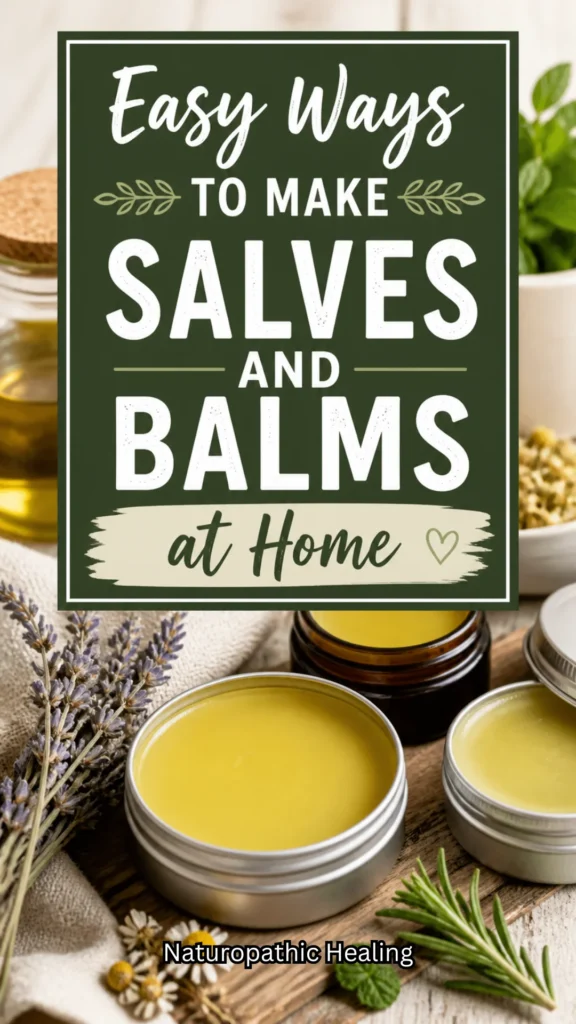
This is the foundation of any great herbal salve or balm. You’re essentially pulling the healing properties of your chosen herbs into the oil, which then becomes the base of your product.
Slow method (best results): Fill a clean glass jar about halfway with dried herbs. Pour your carrier oil over the herbs until they’re fully covered. Seal the jar and let it sit in a warm, sunny window for 4–6 weeks, shaking it gently every few days. This slow infusion gives you a rich, deeply herbal oil.
Quick method: If you’re short on time, use a double boiler or slow cooker. Combine the herbs and oil on the lowest heat setting for 4–8 hours. Keep the temperature below 150°F (65°C) to preserve the plant compounds.
Once your oil is infused, strain out all the plant material through a cheesecloth or fine strainer. What you’re left with is your herbal-infused oil — golden, fragrant, and full of goodness.
Step 2: Melt the Beeswax
Now it’s time to turn that oil into a solid natural healing balm. The key ingredient here is beeswax. It acts as a natural emulsifier and thickener, giving your salve its firm-yet-smooth texture.
Melt your beeswax in a double boiler over low heat. A general rule of thumb:
- For a soft salve: Use about 1 oz of beeswax per 1 cup of oil
- For a firmer balm: Use 1.5–2 oz of beeswax per 1 cup of oil
Once the beeswax is fully melted, add your infused herbal oil and stir gently to combine. The mixture should blend smoothly. Do a quick texture test — drop a small amount on a cold plate and let it solidify for a minute. If it’s too soft, add a little more wax. Too hard? Add a splash more oil.

Step 3: Add Essential Oils and Pour
Remove the mixture from the heat and let it cool slightly — but not fully solidify. This is when you add your essential oils for skin healing. Popular choices include:
- Lavender — soothing and calming, great for burns and irritated skin
- Tea tree — antimicrobial, ideal for cuts and blemishes
- Peppermint — cooling and refreshing, perfect for sore muscle balms
- Frankincense — deeply healing, excellent for aging or damaged skin
Add about 20–30 drops of essential oil per cup of oil mixture. Always do a quick patch test on your inner arm before applying to a larger area to ensure you don’t have an allergy or sensitivity to the essential oils. Stir well and quickly pour into your prepared jars or tins. Work fast — the mixture will begin to firm up within minutes.
Let your DIY healing balm cool completely at room temperature before putting on the lids. Don’t rush this step by putting it in the fridge — it can cause a grainy texture.
Popular Recipes to Try
Now that you know the basics of how to make salves and balms, here are a few variations to experiment with:
- Calendula Healing Salve: Use calendula-infused olive oil with lavender essential oil. Perfect for dry skin, eczema, and minor wounds. For a full step‑by‑step tutorial, check out my DIY calendula salve recipe for healing skin naturally — it’s one of the most soothing herbal balms you can make at home.
- Comfrey Muscle Balm: Comfrey-infused oil is ideal for achy joints, sore muscles, and severely dry skin. For a complete, step-by-step tutorial, check out my Easy Comfrey Salve Recipe for Natural Skin Healing.
- Plantain Drawing Salve: Plantain-infused oil with tea tree essential oil. Great for bug bites, splinters, and skin infections.
- Lip Balm: Use a coconut oil base with a higher ratio of beeswax, and add peppermint or vanilla essential oil for flavor.
- Dandelion Healing Salve: If you want a gentle, moisturizing balm made with wild‑foraged flowers, try my dandelion salve recipe — an easy DIY healing balm perfect for dry, cracked skin.
Storing Your Salves and Balms
Store your finished natural salves in a cool, dark place away from direct sunlight. Properly made, they’ll last anywhere from 1–2 years. If you notice any unusual smell or mold (which is rare if your herbs were fully dried), toss it and make a fresh batch.
Label everything with the date and ingredients — trust me, you’ll thank yourself later when you’re staring at three jars that all look identical.
If you’ve caught the DIY bug and have some leftover wax, be sure to check out our Easy Beeswax Lotion Bars Recipe for DIY Skincare for another simple, skin-nourishing project!
A Healing Tradition Worth Keeping Alive
Making your own herbal salves and balms for natural healing isn’t just a hobby — it’s a form of self-sufficiency and a way to take your wellness into your own hands. Once you try it, you’ll wonder why you ever bought the commercial stuff. Start simple, experiment with different herbs and oils, and don’t be afraid to make it your own.
If you found this guide helpful, please save this pin to your favorite natural healing or herbal remedies Pinterest board — it’s a great resource to come back to! And if you know someone who loves DIY natural beauty or herbal medicine, share this article with them. Spreading the knowledge is how we keep these traditions alive.

