

If you’ve been eating the same way you always have but your belly just keeps growing, you’re not doing anything wrong — your body is going through a massive hormonal shift called menopause, bringing with it that stubborn, seemingly unmovable midsection weight. Belly fat during this time isn’t just about calories; it’s about hormones, inflammation, blood sugar spikes, and a slower metabolism all conspiring against you, which is why a targeted menopause belly fat meal plan can help you fight back without crash dieting or giving up food you actually enjoy. This 7-day guide is designed specifically to work with your changing body, not against it, and make sure to grab the free PDF printable with all the exact recipes at the end of this post!
Table of Contents
Why Menopause Makes Belly Fat So Stubborn
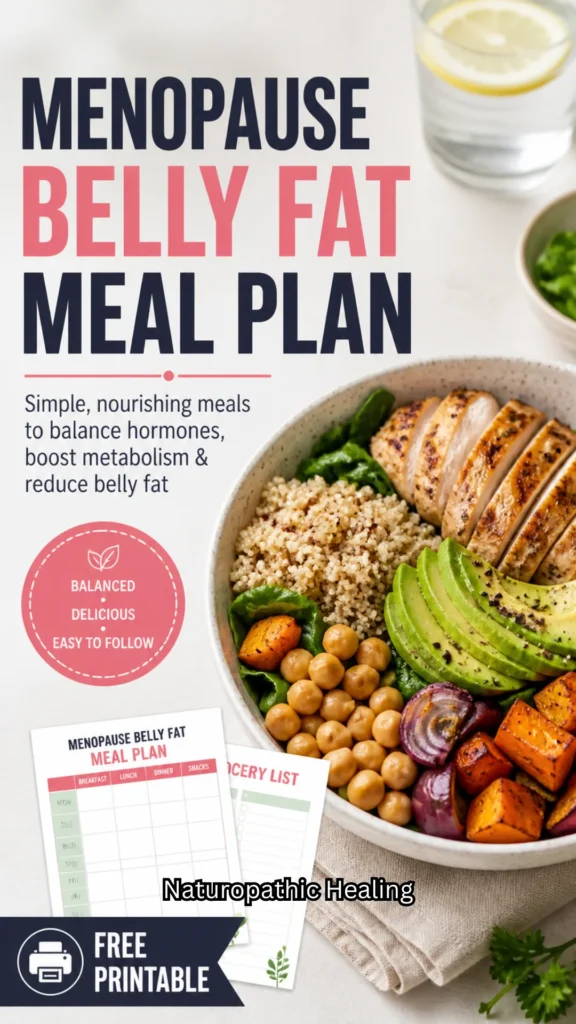
Before you can fix something, you need to understand what’s causing it. During perimenopause and menopause, estrogen levels decline dramatically. This hormonal drop signals your body to redistribute fat — away from the hips and thighs (where premenopausal women typically store it) and straight to the abdomen.
This isn’t just a cosmetic issue. Visceral fat — the deep abdominal fat that surrounds your organs — is metabolically active. It increases your risk of heart disease, type 2 diabetes, and even certain cancers. So fighting menopausal belly fat is genuinely about your long-term health.
On top of estrogen dropping, here’s what else is working against you:
- Insulin sensitivity decreases, meaning your body stores more fat in response to carbs and sugar
- Cortisol levels rise, especially if you’re stressed or sleep-deprived, which directly promotes abdominal fat storage
- Muscle mass declines, slowing your resting metabolism
- Gut microbiome shifts, affecting digestion, bloating, and inflammation
The good news is that a menopause diet for belly fat directly addresses all of these factors. The right foods can help regulate insulin, lower cortisol, preserve muscle, and reduce inflammation all at the same time.
What to Eat on a Menopause Belly Fat Meal Plan
Before we get into the 7-day plan, let’s talk about the nutritional principles that drive it. This isn’t about eating less — it’s about eating right. Here’s what your menopause weight loss meal plan should be built around:
Protein — Your Best Friend During Menopause
High-protein foods are non-negotiable on a menopause belly fat diet. Protein preserves muscle mass (which declines with age), keeps you feeling full for longer, and has a high thermic effect — meaning your body burns more calories just digesting it. Aim for 25–30 grams of protein at each meal.
Best protein sources for menopause:
- Salmon, sardines, mackerel, and other fatty fish
- Chicken breast and turkey
- Eggs and egg whites
- Greek yogurt and cottage cheese
- Tofu, tempeh, and edamame
- Lentils, chickpeas, and black beans
- Whey or plant-based protein powder
Fiber — The Blood Sugar Stabilizer
Dietary fiber is essential for a menopause belly fat meal plan because it slows digestion, prevents blood sugar spikes, and feeds the beneficial bacteria in your gut. Both soluble and insoluble fiber are important. Aim for at least 25–30 grams per day.
Best fiber sources:
- Oats and oat bran
- Flaxseeds and chia seeds
- Lentils and legumes
- Broccoli, cauliflower, and Brussels sprouts
- Apples, pears, and berries
- Psyllium husk
- Quinoa and barley
Healthy Fats — Hormone Support in Every Bite
Many women make the mistake of cutting fat to lose weight. But healthy fats are essential for hormone production, brain function, and reducing inflammation. The key is choosing the right fats.
Best healthy fat sources:
- Avocado and avocado oil
- Extra virgin olive oil
- Walnuts, almonds, and other tree nuts
- Salmon and other oily fish (double-duty: protein AND fat)
- Flaxseeds and hemp seeds
- Full-fat Greek yogurt (in moderation)
Phytoestrogens — Nature’s Hormone Helpers
Phytoestrogens are plant compounds that mildly mimic estrogen in the body. Research suggests they can help ease menopausal symptoms and may assist with hormonal belly fat. They’re a secret weapon in any menopause diet meal plan.
Best phytoestrogen sources:
- Flaxseeds (the richest dietary source of lignans)
- Soy foods: tofu, tempeh, edamame, miso
- Chickpeas and lentils
- Sesame seeds
- Berries, especially strawberries and blueberries
- Cruciferous vegetables
Note: If you have a history of hormone-sensitive conditions, such as estrogen-receptor-positive cancer, please check with your doctor or oncologist before actively increasing your soy or phytoestrogen intake.
Anti-Inflammatory Foods — Fighting Fat at the Root
Chronic inflammation is a major driver of visceral fat during menopause. An anti-inflammatory eating approach helps reduce the inflammatory compounds that encourage your body to store fat around the abdomen.
Best anti-inflammatory foods:
- Turmeric (especially with black pepper for absorption)
- Ginger
- Fatty fish rich in omega-3s
- Berries and tart cherries
- Leafy greens (spinach, kale, arugula)
- Extra virgin olive oil
- Green tea
- Dark chocolate (70%+ cocoa, in moderation)
Foods to Avoid on a Menopause Belly Fat Diet
Equally important to what you eat is what you limit. These foods actively make menopausal belly fat worse:
- Refined Sugar and Processed Carbohydrates: White bread, pastries, cookies, sugary cereals, candy — these cause rapid blood sugar spikes followed by crashes, which trigger insulin release and fat storage, particularly in the abdomen. Switching to complex carbohydrates (whole grains, legumes, vegetables) is one of the single most impactful changes you can make.
- Alcohol: Alcohol is particularly problematic during menopause. It disrupts sleep (which raises cortisol and drives belly fat), worsens hot flashes, stresses the liver (which is involved in estrogen metabolism), and adds empty calories. Even moderate drinking can make menopause weight gain significantly harder to manage.
- Trans Fats and Heavily Processed Foods: Packaged snacks, fast food, margarine, and anything with “partially hydrogenated oils” in the ingredient list are loaded with trans fats that promote inflammation and fat accumulation. They also tend to be high in sodium and artificial additives that disrupt gut health.
- Excess Sodium: High sodium intake causes water retention and bloating — making your belly look and feel bigger even if you haven’t gained true fat. Aim to limit sodium to under 2,300mg per day, and watch out for hidden sodium in canned goods, sauces, and deli meats.
- Sugary Drinks: Sodas, fruit juices, sweetened coffee drinks, and energy drinks are essentially liquid sugar — they spike blood glucose fast, offer zero satiety, and go straight to fat storage. Swap them for water, herbal tea, or sparkling water with a squeeze of lemon.
The 7-Day Menopause Belly Fat Meal Plan
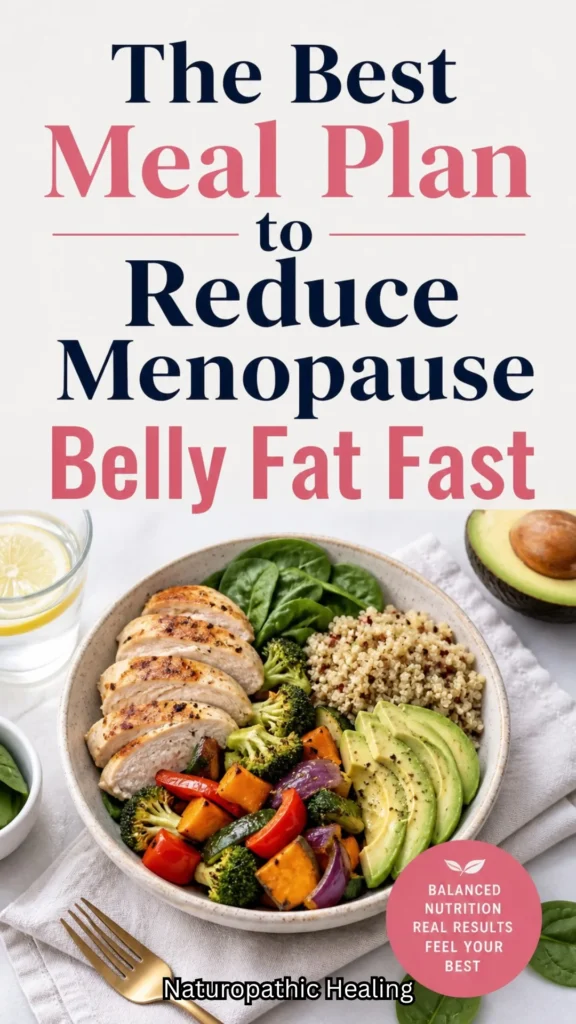
This plan is built around foods that balance hormones, control blood sugar, fight inflammation, and keep you full. Each day includes breakfast, lunch, dinner, and a snack. Recipes for all meals are available in the companion Recipe Card document.
Day 1 — Monday: Hormone-Balancing Kickoff
- Breakfast: Greek yogurt power bowl with blueberries, ground flaxseeds, walnuts, and a drizzle of honey
- Mid-Morning Snack: A small handful of almonds and a green apple
- Lunch: Salmon and quinoa salad with baby spinach, avocado, cucumber, olive oil, and lemon dressing
- Dinner: Turmeric-spiced chicken breast with roasted broccoli, cauliflower, and red bell pepper
- Focus nutrients: Omega-3s, phytoestrogens (flaxseeds), lean protein, anti-inflammatory turmeric
Day 2 — Tuesday: Plant Power Day
- Breakfast: Flaxseed and banana protein smoothie with almond milk, cinnamon, and almond butter. Looking to mix up your morning routine? Check out our guide to the 10 Best Smoothies for Women During Menopause for more quick, hormone-balancing recipes to swap into this meal plan.
- Mid-Morning Snack: Celery sticks with hummus
- Lunch: Red lentil soup with kale, cumin, smoked paprika, and diced tomatoes
- Dinner: Baked cod with roasted sweet potato wedges and asparagus, finished with lemon and fresh parsley
- Focus nutrients: Plant protein, soluble fiber, complex carbs, omega-3s
Day 3 — Wednesday: Anti-Inflammatory Focus
- Breakfast: Overnight oats with chia seeds, sliced strawberries, almond butter, and a pinch of cinnamon
- Mid-Morning Snack: Hard-boiled eggs (2) with a pinch of sea salt and black pepper
- Lunch: Grilled turkey and avocado lettuce wraps with tomato, cucumber, and a drizzle of olive oil
- Dinner: Ginger-soy glazed salmon with steamed edamame and brown rice
- Focus nutrients: Phytoestrogens (edamame, soy), ginger, omega-3s, resistant starch (brown rice)
Day 4 — Thursday: Gut Health Day
- Breakfast: Two-egg veggie omelette with spinach, mushrooms, and feta cheese, served with a slice of whole grain toast
- Mid-Morning Snack: Plain kefir (unsweetened) with a small handful of mixed berries
- Lunch: Chickpea and roasted vegetable bowl with tahini dressing, fresh herbs, and lemon
- Dinner: Baked chicken thighs with roasted Brussels sprouts and a warm farro and arugula salad
- Focus nutrients: Probiotics (kefir), fiber, cruciferous vegetables for estrogen metabolism, whole grains
Day 5 — Friday: Metabolism Boost Day
- Breakfast: Cottage cheese bowl with sliced peaches, hemp seeds, and a drizzle of honey
- Mid-Morning Snack: A small handful of walnuts and a square of 70%+ dark chocolate
- Lunch: Tuna and white bean salad with cherry tomatoes, olives, red onion, fresh basil, and olive oil
- Dinner: Stir-fried tofu with bok choy, snap peas, garlic, ginger, and a sesame-tamari sauce over cauliflower rice
- Focus nutrients: Plant estrogens (tofu), high protein (cottage cheese, tuna), anti-inflammatory dark chocolate
Day 6 — Saturday: Slow and Satisfying Day
- Breakfast: Smoked salmon and avocado on whole grain rye crispbread with capers and red onion
- Mid-Morning Snack: Sliced bell peppers with guacamole
- Lunch: Black bean and sweet potato soup with cumin, coriander, and a squeeze of lime, topped with Greek yogurt
- Dinner: Herb-crusted baked trout with roasted asparagus and a warm quinoa salad with sun-dried tomatoes and spinach
- Focus nutrients: Omega-3s (smoked salmon, trout), complex carbs, gut-healthy legumes
Day 7 — Sunday: Reset and Restore Day
- Breakfast: Chia seed pudding made with coconut milk, topped with mango chunks, toasted coconut flakes, and a drizzle of almond butter
- Mid-Morning Snack: Mixed berries with a spoonful of Greek yogurt
- Lunch: Large leafy green salad with grilled chicken, sliced avocado, pumpkin seeds, cherry tomatoes, and apple cider vinegar dressing
- Dinner: Slow-cooked turkey and vegetable stew with carrots, celery, leeks, lentils, and fresh thyme, served with crusty whole-grain bread
- Focus nutrients: Phytoestrogens (pumpkin seeds, chia), lean protein, fiber, warming comfort foods
How to Make This Meal Plan Work Long-Term
A 7-day menopause belly fat meal plan is a great start, but the real magic happens when these habits become your default way of eating. Here are some practical strategies to stay on track:
- Meal Prep Is Your Secret Weapon: Spend 1–2 hours on Sunday prepping components for the week — cook a big batch of quinoa, roast a tray of vegetables, pre-portion snacks, and hard-boil a few eggs. When healthy food is ready to grab, you’re far less likely to reach for something processed when hunger hits.
- Don’t Skip Meals: Skipping meals — especially breakfast — can cause blood sugar to plummet, triggering cortisol release and making fat loss harder. The goal of a menopause diet is metabolic stability, not deprivation. Eating every 3–4 hours keeps energy steady and prevents the ravenous hunger that leads to poor food choices.
- Hydrate Consistently: Dehydration is often mistaken for hunger, and it makes bloating and water retention worse. Aim for 8–10 glasses of water per day. Herbal teas (especially green tea, which contains EGCG — an antioxidant linked to fat oxidation) are a great way to stay hydrated while getting additional benefits.
- Pair Your Meal Plan With Movement: You’ll get dramatically better results from your menopause belly fat meal plan if you pair it with strength training at least 2–3 times per week. Muscle tissue burns calories even at rest, and building lean muscle is the most effective long-term tool for fighting middle-aged weight gain. Walking daily (even 30 minutes) also helps regulate cortisol and improve insulin sensitivity.
- Prioritize Sleep: This one is non-negotiable. Poor sleep raises ghrelin (the hunger hormone) and cortisol while lowering leptin (the fullness hormone). Even the best meal plan for menopause belly fat will struggle to deliver results if you’re chronically sleep-deprived. Aim for 7–9 hours, and practice good sleep hygiene: cool room, no screens 30 minutes before bed, consistent bedtime.
- Manage Stress Actively: While dialing in your nutrition is a massive piece of the puzzle, navigating this transition often requires a holistic approach. If you are struggling with hot flashes, mood swings, or brain fog alongside stubborn weight, explore these 15 Natural Remedies for Menopause That Actually Work for extra support.
A Note on Supplements
While a menopause belly fat diet based on whole foods should always come first, some supplements may offer additional support:
- Magnesium glycinate: Helps with sleep, stress, and insulin sensitivity
- Vitamin D3 + K2: Most menopausal women are deficient; essential for bone health and metabolism
- Omega-3 fish oil: If you’re not eating fatty fish 3x per week
- Probiotics: To support the gut microbiome shifts that happen during menopause. If you aren’t sure which ones to choose, read our detailed breakdown of the Best Probiotics for Menopause: Top Strains for Hormone Balance.
- Collagen peptides: To support joint health and skin elasticity
Always consult your healthcare provider before starting any supplement regimen.
The Bottom Line
Menopause belly fat doesn’t have to be your new normal. It’s not a life sentence, and it’s not about willpower. It’s about understanding what your body needs at this specific stage of life and giving it exactly that. A strategic menopause belly fat meal plan — built on high-protein foods, fiber, healthy fats, phytoestrogens, and anti-inflammatory ingredients — can genuinely transform how you look and feel in your 50s and beyond.
Start with this 7-day plan, pick up the recipe cards, and commit to one week. You might be surprised at how quickly your body responds when you finally start working with your hormones instead of against them.
If you found this guide helpful, save it to your Pinterest healthy living board so you can come back to it anytime — and share it with the women in your life who are going through the same journey. You don’t have to figure this out alone, and the more we share what works, the better we all do.

Download your FREE 7-Day Menopause Belly Fat Meal Plan
👇 Ready to get started? Download your FREE 7-Day Menopause Belly Fat Meal Plan Recipe PDF right here!
