
In today’s world of chemical-laden products, more people are turning to natural alternatives for skincare. One area where this trend is gaining momentum is sun protection. Natural homemade sunscreen offers a way to shield your skin from harmful UV rays while avoiding potentially irritating synthetic ingredients. But does DIY sun protection really work? And how can you make effective sunscreen at home using ingredients from your kitchen or garden?
Table of Contents
Why Consider Making Your Own Sunscreen?
I started exploring homemade sunscreen recipes after developing a rash from commercial products. Maybe you’re in the same boat, or perhaps you’re simply trying to reduce your exposure to chemicals and embrace a more natural lifestyle.
The appeal of DIY sunscreen is undeniable:
- You control exactly what goes onto your skin
- Many natural ingredients have inherent sun-protective properties
- It’s often more affordable than premium natural brands
- Making your own can reduce plastic packaging waste
- The process is surprisingly simple and satisfying
That said, homemade sunscreens come with important considerations that we’ll explore throughout this guide.
Understanding SPF and Sun Protection Basics
Before diving into DIY recipes, let’s understand what we’re trying to achieve. SPF (Sun Protection Factor) measures how effectively a sunscreen blocks UVB rays—the ones that cause sunburn. Commercial sunscreens undergo rigorous testing to verify their SPF claims.
When making natural sunscreen at home, it’s important to recognize that:
- Homemade options typically provide lower SPF (usually around 5-15)
- Natural blockers work differently than chemical sunscreens
- DIY formulas generally need more frequent reapplication
- They may not offer broad-spectrum protection against both UVA and UVB rays
This doesn’t mean natural alternatives aren’t valuable—just that understanding their limitations helps you use them safely and effectively.
Key Ingredients for Natural Homemade Sunscreen
The backbone of effective DIY sun protection is physical blockers combined with nourishing carrier oils and antioxidant-rich additions. Here are the stars of natural sunscreen formulations:
Physical Blockers
Zinc oxide is the powerhouse ingredient in most homemade sunscreen recipes. This mineral creates a physical barrier that reflects and scatters UV radiation. For DIY sunscreen, non-nano zinc oxide is preferred as it doesn’t penetrate the skin.
Titanium dioxide is another mineral blocker sometimes used in natural formulations, though zinc oxide is generally more accessible and provides better broad-spectrum protection.
Base Oils with Natural SPF
While no oil provides enough protection on its own, several carrier oils offer modest natural sun-protective properties that enhance your homemade sunscreen:
- Raspberry seed oil (SPF 25-50)
- Carrot seed oil (SPF 35-40)
- Red raspberry seed oil (SPF 28-50)
- Wheat germ oil (SPF 20)
- Coconut oil (SPF 4-6)
- Olive oil (SPF 2-8)
- Shea butter (SPF 3-6)
Antioxidant Boosters
These ingredients don’t increase SPF but help protect skin from free radical damage caused by sun exposure:
- Vitamin E oil (protects skin cells and preserves the formula)
- Green tea extract (powerful antioxidant properties)
- Red algae extract (natural UV protection)
- Carrot seed essential oil (skin-rejuvenating properties)
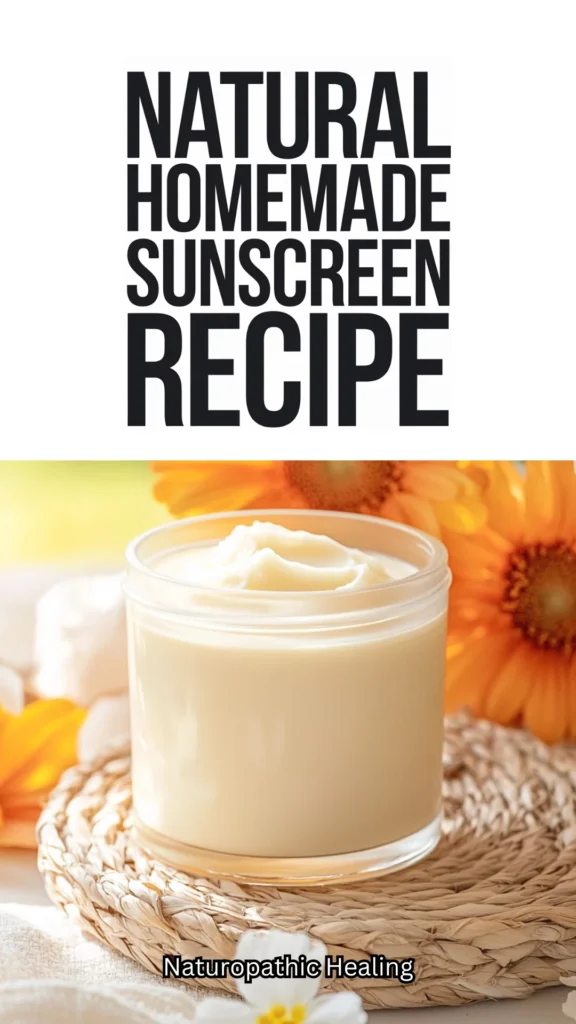
Basic Natural Homemade Sunscreen Recipe
Let’s start with a simple but effective DIY sunscreen that provides approximately SPF 15-20:
Ingredients:
- ¼ cup coconut oil
- ¼ cup shea butter
- 2 tablespoons beeswax pellets
- 2 tablespoons zinc oxide powder (non-nano)
- 1 teaspoon raspberry seed oil
- 1 teaspoon carrot seed oil
- 20 drops lavender essential oil (optional, for scent)
- 10 drops vitamin E oil
Instructions:
- Create a double boiler by placing a heat-safe glass bowl over a pot of simmering water
- Melt the coconut oil, shea butter, and beeswax in the bowl, stirring occasionally
- Remove from heat once completely melted
- Allow to cool slightly (but not solidify)
- Add zinc oxide powder—wear a mask to avoid inhalation
- Add remaining oils and stir thoroughly
- Pour into glass jars and allow to cool completely
- Store in a cool, dark place and use within six months
Customizing Your Natural Sunscreen
The beauty of making sunscreen at home is the ability to tailor it to your needs. Here are some variations to consider:
For Higher SPF
Increase the zinc oxide to 3-4 tablespoons for approximately SPF 30-35. Remember that homemade formulas haven’t been lab-tested, so err on the side of caution.
For Sensitive Skin
Omit essential oils and use unrefined shea butter along with calendula-infused oil for a gentle formula.
For Water Resistance
Increase beeswax to 3 tablespoons and add 1 tablespoon of candelilla wax or carnauba wax.
For Darker Skin Tones
The white cast from zinc oxide can be minimized by using less zinc oxide and incorporating oils with natural tinting properties like cocoa butter.
Application Tips for Homemade Sunscreen
Using natural sunscreen correctly is just as important as making it properly:
- Apply generously 15-30 minutes before sun exposure
- Reapply every 1-2 hours, more frequently if swimming or sweating
- Don’t rely solely on homemade sunscreen for extended beach days or high-altitude activities
- Store in a cool place—natural formulas can melt in hot conditions
- Consider using alongside other sun protection methods like hats and UPF clothing
Beyond Zinc: Alternative Natural Sun Protection
If you’re looking for zinc-free options, here are some alternatives:
Aloe Vera and Coconut Oil Blend
Mix equal parts aloe vera gel and coconut oil for a light, moisturizing formula with minimal sun protection (approximately SPF 4-6). This works for brief, everyday sun exposure.
Antioxidant-Rich Oil Blend
Combine:
- 2 tablespoons raspberry seed oil
- 2 tablespoons avocado oil
- 1 tablespoon carrot seed oil
- 1 teaspoon vitamin E oil
This creates a nourishing oil with some UV-protective properties—best for incidental sun exposure only.
Important Safety Considerations
While exploring natural sunscreen alternatives is exciting, safety must come first:
- DIY sunscreen hasn’t undergone the rigorous testing of commercial products
- People with high skin cancer risk should use commercially tested products
- Patch test any homemade formula before applying widely
- Consider natural options as supplementary to other sun protection methods
- Be especially cautious with children’s sensitive skin
- Remember that natural doesn’t automatically mean safer or better
The Reality Check: Pros and Cons of DIY Sun Protection
Pros of Natural Homemade Sunscreen
- Avoids potentially harmful chemicals like oxybenzone
- Environmentally friendly (reef-safe when properly formulated)
- Economical for families
- Often doubles as nourishing skincare
- Can be customized for different skin types
Cons to Consider
- Unverified SPF levels
- Potentially inconsistent protection
- Shorter shelf life than commercial products
- May leave a white cast on skin
- Requires more frequent reapplication
- Time-intensive to prepare
Enhancing Your Sun Protection Naturally
Homemade sunscreen works best as part of a comprehensive approach to sun safety. Consider these complementary strategies:
- Eat a diet rich in antioxidants (berries, leafy greens, tomatoes)
- Take astaxanthin supplements (a powerful antioxidant that can boost skin’s resistance to sun damage)
- Plan outdoor activities outside peak UV hours (10am-4pm)
- Invest in UPF clothing and wide-brimmed hats
- Seek shade regularly
- Stay hydrated to support skin health
Frequently Asked Questions About Natural Homemade Sunscreen
Homemade sunscreen generally provides lower and less consistent SPF than commercial products. It’s best used for everyday, incidental sun exposure rather than beach days or extended outdoor activities.
Without commercial preservatives, DIY sunscreen typically lasts 3-6 months when stored properly in a cool, dark place. Adding vitamin E oil helps extend shelf life.
Yes, but test on a small area first. If you’re acne-prone, consider using non-comedogenic oils like jojoba or grapeseed in your facial sunscreen recipe.
For babies under 6 months, physical protection (shade, clothing) is recommended instead of any sunscreen. For older babies and children, natural formulations may be gentler but should be tested carefully. Always consult your pediatrician.
Temperature fluctuations can cause separation. If this happens, gently rewarm and stir to recombine the ingredients in your DIY sunscreen.
Yes, a small amount of iron oxide powder can tint your natural sunscreen to better match your skin tone and reduce the white appearance of zinc oxide.
Embracing the Natural Sunscreen Journey
Making your own natural homemade sunscreen is more than just a craft project—it’s part of a mindful approach to skincare and environmental responsibility. While DIY formulations may not replace commercial products entirely, they offer a valuable alternative for everyday use and connect us more deeply to the ingredients we put on our bodies.
If you’ve enjoyed learning about natural sun protection options, why not save this article to your “Natural Skincare” Pinterest board? Share these DIY sunscreen recipes with friends who are interested in natural alternatives—together, we can explore effective ways to care for our skin while respecting our bodies and the planet.

